A Hindu wedding is not one event. It is a set of ceremonies, family rituals, vendor bookings and legal steps that can stretch across three to five days. Miss one small thing, like the pooja samagri or the pandit's timing, and the whole day can slow down.
This Hindu wedding checklist puts everything in one place. You will find a month-by-month timeline, a ritual-by-ritual list of what to arrange, a full samagri list, vendor tips, legal steps and a wedding day emergency kit. It works for North Indian, South Indian, Bengali, Gujarati, Marathi and other Hindu traditions, and you can adjust it for your family customs.
Hindu Wedding Checklist at a Glance
Use this summary as your master plan. Each stage is explained in detail below.
| When | What to finish |
| 12 to 9 months before | Budget, guest estimate, muhurat, city, venue, pandit, planner, key vendors |
| 8 to 6 months before | Final guest list, decor, makeup, mehendi artist, outfits, travel and stay |
| 5 to 3 months before | Invitations, menu tasting, ritual plan, samagri list, sangeet planning |
| 2 months before | Fittings, gifts, RSVPs, beauty trials, legal documents |
| 1 month before | Final head count, seating, vendor schedule, family responsibilities |
| Final week | Weather plan, packing, payments, emergency kit, rest |
Who Is This Hindu Wedding Checklist For?
This guide is for couples, parents and family members who are planning a Hindu wedding in India or abroad. It is also useful if you are planning an interfaith wedding with Hindu rituals, or if you are an NRI family organising a wedding from another country.
One important note: Hindu wedding customs change from region to region and even from family to family. Treat this checklist as a strong base. Then speak with your family elders and your pandit to add or remove rituals.
Hindu Wedding Planning Checklist: Month by Month
12 to 9 Months Before the Wedding
This is the foundation stage. Decisions made here affect every other booking.
- Sit down with both families and talk openly about the total budget and who will cover which costs.
- Make a first guest estimate. An approximate number is enough at this stage.
- Decide your top three priorities, such as food, venue, photography or decor. Spend more on the things that matter most to you, and save where you can on the rest.
- Complete kundli matching if your family follows it.
- Speak to a pandit or astrologer and get two or three auspicious wedding dates.
- Choose the city and style of wedding: home, banquet hall, resort, palace or destination.
- Shortlist and book the venue and nearby stay for guests.
- Book your pandit, caterer and photographer early, because good vendors fill up fast on auspicious dates.
- Decide whether you need a wedding planner and book one if you do.
- Create a shared sheet for budget, guest list, vendors and tasks so both families see the same updates.
8 to 6 Months Before the Wedding
- Finalise the guest list in two parts: must-invite and nice-to-invite.
- Book the decorator, makeup artist, mehendi artist, DJ or band, and baraat arrangements such as the ghodi and dhol.
- Start shopping for the bridal and groom outfits. Custom outfits can take several months.
- Share a save-the-date message with outstation and overseas guests so they can book travel early.
- Make the function list with your pandit and family: which ceremonies you will hold, on which day and at which location.
- Check passports and visas if guests or the couple are travelling from abroad.

5 to 3 Months Before the Wedding
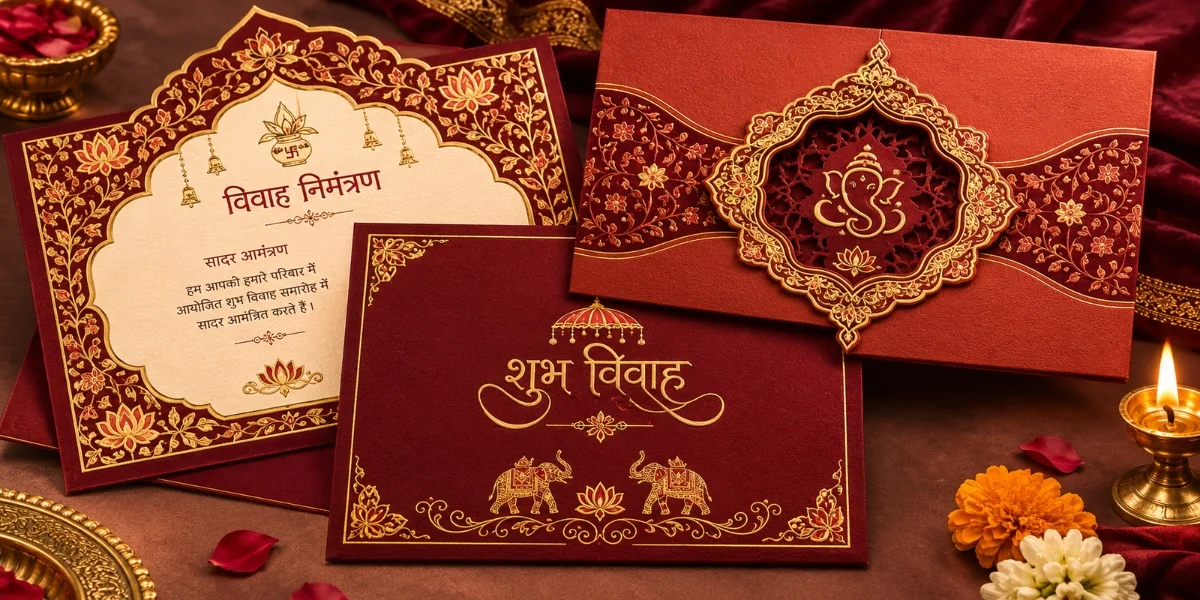
- Design and print wedding cards. Also create a digital invitation for WhatsApp and email.
- Attend the menu tasting and lock the menu for each function.
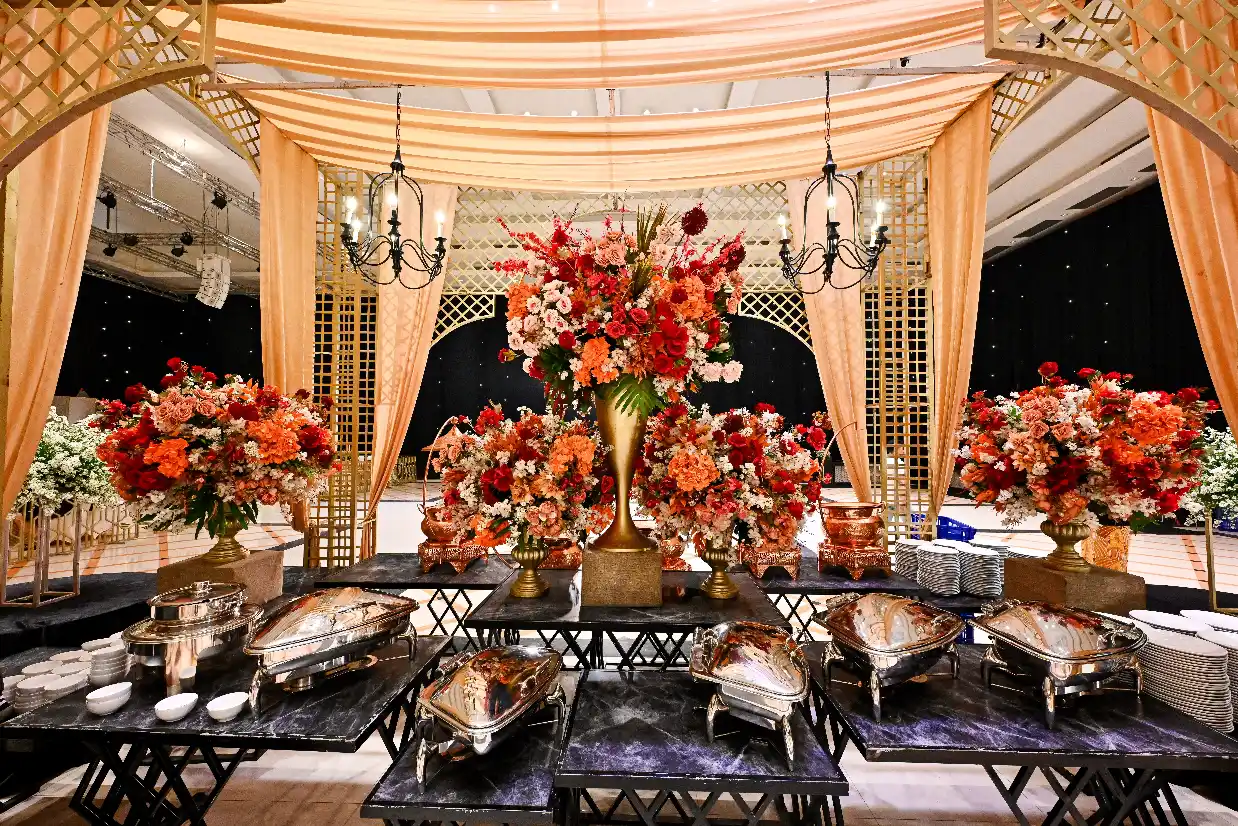
- Finalise the mandap design, floral decor and lighting.
- Book transport for the baraat, guests and family members.
- Ask the pandit for the full samagri list and start buying items in stages.
- Plan sangeet performances and begin rehearsals.
- Order return gifts and shagun items.
2 Months Before the Wedding
- Do outfit fittings and alterations. Keep time for a second round if needed.
- Collect RSVPs and update the guest count.
- Plan the lena-dena (gift exchange) list and prepare gifts for relatives.
- Book skin, hair and grooming trials.
- Start collecting documents for marriage registration.
- Confirm the honeymoon plan and travel documents.

1 Month Before the Wedding
- Share the final head count with the caterer and venue.
- Prepare room allocation and seating plans.
- Create a one-page schedule for every function and share it with all vendors and family leads.
- Assign one responsible family member to each ritual, such as milni, jaimala, kanyadaan items and vidai.
- Confirm payment dates and balance amounts for each vendor.
- Collect jewellery, mangalsutra, toe rings and other ritual jewellery.
Final Week
- Check the weather forecast and confirm a backup plan for outdoor events.
- Pack outfits function by function, with accessories in labelled pouches.
- Keep cash envelopes ready for vendor tips, musicians, helpers and ritual offerings.
- Do a final call with every vendor to confirm arrival time and setup.
- Prepare your wedding day emergency kit (full list below).
- Sleep well. A rested couple enjoys the rituals far more.
How to Fix the Muhurat and Wedding Date
The muhurat is the auspicious time for the main ceremony, and most families fix it first because everything else depends on it. Your pandit or family astrologer usually checks the panchang, the couple's kundlis and the traditional dates that are avoided, such as Chaturmas, Pitru Paksha and Kharmas. Customs differ by community, so always confirm with your own pandit.
Get two or three date options rather than just one. This gives you room to check venue and vendor availability. You can also read our list of auspicious Hindu wedding dates in 2027 to start your shortlist.
If you are planning a wedding in the coming weeks, here are the auspicious Hindu wedding dates for 2026.
Hindu Wedding Budget Checklist
A clear budget stops arguments later. List every cost head before you book anything, and keep a buffer for surprises.
- Venue rental and room bookings
- Catering for every function, including welcome drinks and late-night snacks
- Decor, mandap, florals and lighting
- Photography and videography
- Pandit fees and pooja samagri
- Bridal and groom outfits, family outfits and jewellery
- Makeup, hair and mehendi
- Music, DJ, band, dhol and sangeet choreography
- Invitations and stationery
- Guest travel, local transport and accommodation
- Return gifts and shagun envelopes
- Legal and registration costs
- Wedding planner fees, if you hire one
- Contingency fund for last-minute needs
As a simple rule, keep a buffer for unplanned costs. Extra guests, outfit changes and late vendor charges almost always appear in the final month.
Guest List and Invitations Checklist
- Build the guest list in groups: immediate family, extended family, friends, work contacts and community.
- Mark who needs stay, who needs airport pickup and who is attending only one function.
- Choose invitation formats: printed cards for elders, digital cards for everyone else.
- Mention function names, dates, timings, venue addresses and dress code on the invite.
- Create a WhatsApp group for each function so updates reach everyone quickly.
- Track RSVPs in one sheet and follow up at least twice.
If a large part of your family lives overseas, our guide on planning an NRI destination wedding without visiting India shows how to manage vendors, payments and guest travel from abroad.

Venue Checklist for a Hindu Wedding
Hindu weddings need a venue that supports rituals, not just a nice hall. Many couples forget to check ritual-specific needs until it is too late.
- Permission for a havan or sacred fire. Many hotels and banquet halls have rules about open flames and smoke.
- A mandap area with enough space for the couple, pandit, parents and close relatives.
- A separate space for haldi and mehendi that can handle stains and mess.
- A baraat route and entry point with room for the ghodi, dhol and dancers.
- Sound limits and music cut-off times set by local rules.
- Rooms for the bride and groom to get ready, plus rooms for family.
- Make sure the venue has enough parking, reliable power backup, and a clear plan for bad weather.
- Pure vegetarian kitchen or separate cooking areas, if your family needs this.
You can compare hotels, resorts and palaces on our wedding venues page and shortlist the ones that allow Hindu wedding rituals.
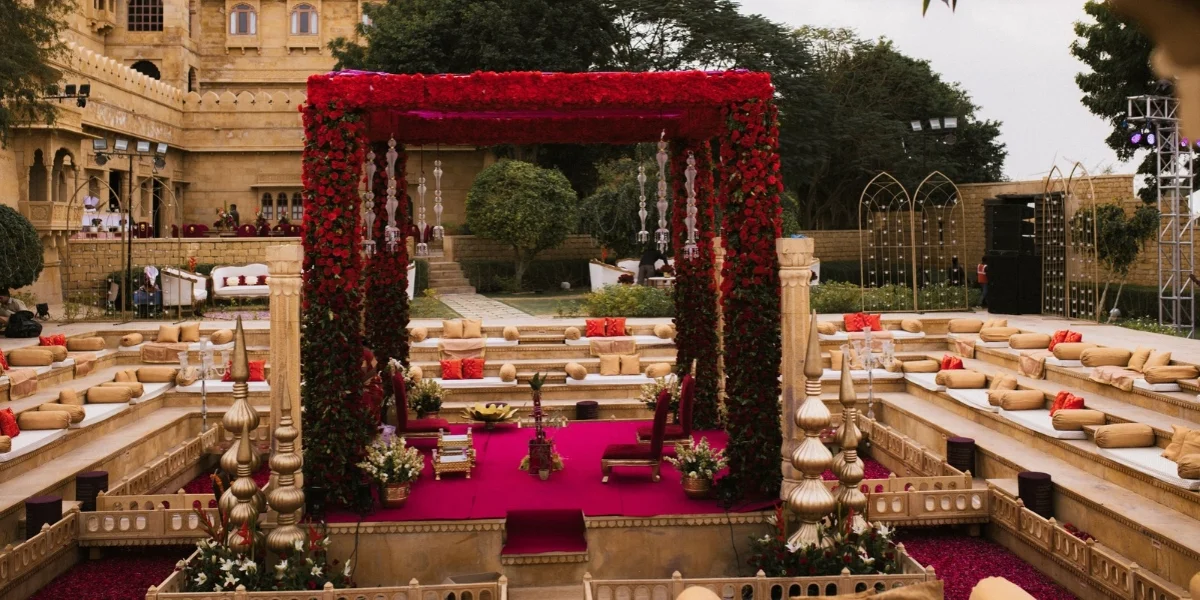
Pandit and Ritual Planning Checklist
Your pandit guides the entire ceremony, so treat this booking as seriously as the venue.
- Book the pandit as soon as the date is fixed.
- Ask which language the mantras and explanation will be in, so guests can follow along.
- Confirm the exact muhurat for each key ritual and the total ceremony duration. The main ceremony often takes around two to three hours, depending on the family and region.
- Get the samagri list in writing and decide who will buy it.
- Ask if a shorter version of the rituals is possible if guests or time are limited.
- Share your family's customs, such as extra rituals from your kuldevi or gotra traditions.
- Plan a rehearsal if you want the couple and parents to know their roles.
- Keep a backup pandit number, in case of an emergency.
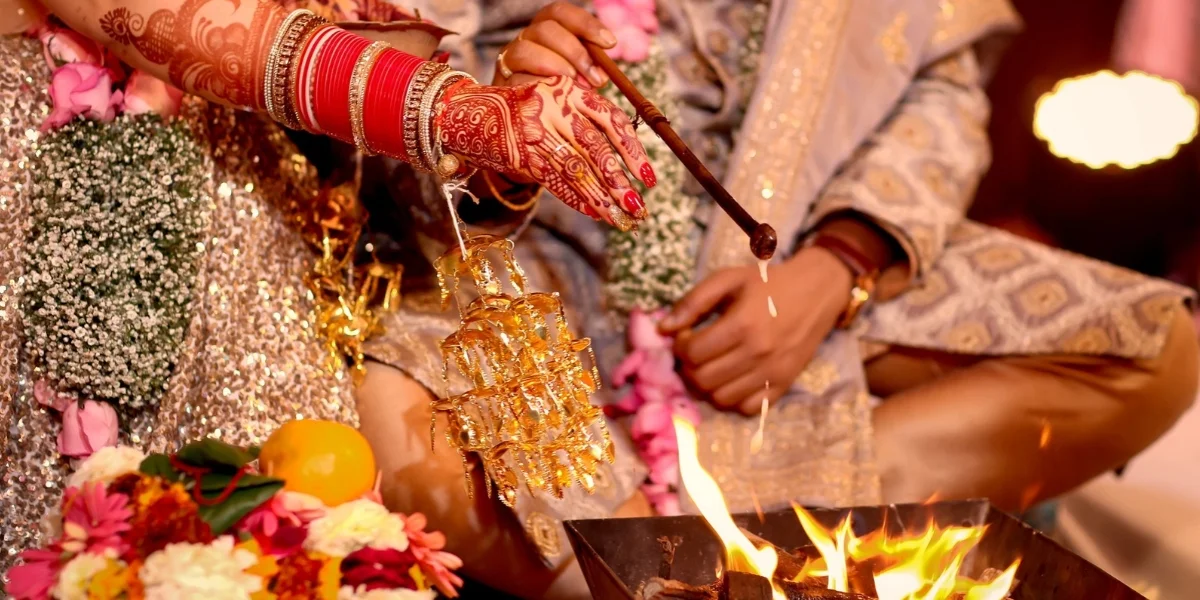
Pre-Wedding Ceremonies Checklist
Many Hindu weddings begin days before the main ceremony. Here are the common ones and what to arrange for each.
| Ceremony | What it is | What to arrange |
| Roka or Sagai (engagement) | Families formally accept the match and exchange gifts and rings | Rings, sweets, gifts, small puja items, photographer |
| Ganesh Puja | Prayers to Lord Ganesha to remove obstacles | Pandit, puja thali, flowers, modak or sweets |
| Haldi | Turmeric paste applied to the couple for blessings and glow | Fresh haldi paste, rose water, yellow outfits, old clothes for guests, cleaning help |
| Mehendi | Henna designs applied on the bride's hands and feet | Mehendi artists, seating, snacks, music, enough time for drying |
| Sangeet | Music and dance night with both families | Stage, sound, DJ, emcee, choreographer, performance schedule |
| Mata ki Chowki or local rituals | Prayers or community customs, common in some regions | Priest or singers, bhog, seating |
Always confirm with your family which of these you will hold. Some families skip the sangeet, some add it, and some combine haldi and mehendi on the same day to save time.
Wedding Day Rituals Checklist
The main day follows a clear order in most Hindu weddings. Here is a common sequence, along with what you should prepare for each step.
1. Baraat: The groom's procession arrives with music and dancing. Arrange the ghodi or car, dhol, baraat route, and a person to guide the guests.
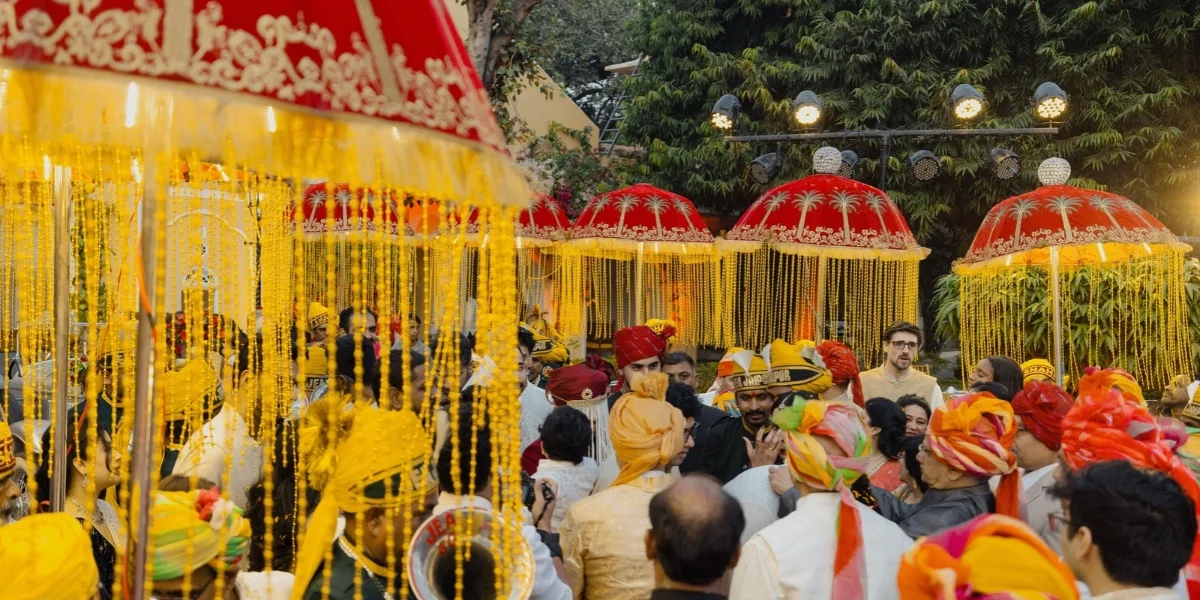
2. Milni: Both families meet and exchange garlands and gifts. Keep garlands and gift items ready in order, with names marked.
3. Jaimala or Varmala: The couple exchanges garlands. Keep fresh garlands and a stage with good lighting for photos.
4. Kanyadaan: The bride's parents give her hand to the groom with blessings. The pandit will list the items needed.
5. Hast Milap or Panigrahan: The couple's hands are joined. Keep haldi, kumkum, rice and the sacred cloth ready.
6. Havan and Agni Puja: Offerings are made to the sacred fire. Keep ghee, havan samagri, samidha and a safe fire setup.
7. Mangal Pheras or Saptapadi: The couple takes seven rounds around the fire, each with a vow. Some communities do four pheras, so confirm with your pandit.
8. Sindoor and Mangalsutra: The groom applies sindoor and ties the mangalsutra. Keep both in a clean thali and brief the photographer.
9. Blessings: The couple takes blessings from elders and the pandit. Keep a path clear and arrange a small seating area for elders.
Post-Wedding Rituals Checklist
- Vidai: The bride's farewell. Keep rice, flower petals and a decorated car ready, and give the family some privacy.
- Griha Pravesh: The bride enters her new home. Keep a kalash of rice at the doorway, an aarti thali, and alta or kumkum for footprints.
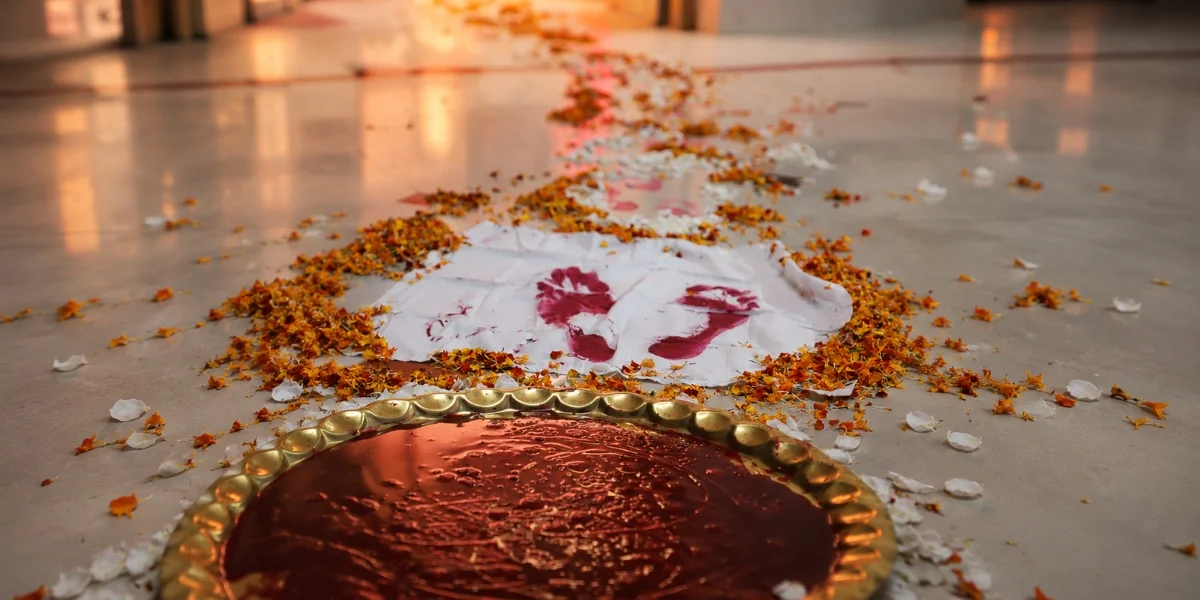
- Games and welcome rituals: Many families hold small rituals such as ring games or mooh dikhai. Prepare gifts and sweets.
- Reception: A celebration party for friends, colleagues and extended family. Arrange the stage, menu, photo booth and outfits.
Hindu Wedding Pooja Samagri List
The pooja samagri is the set of items used in the havan and rituals. Your pandit will give you a final list, but this is a reliable starting point.
| Category | Items |
| Basic puja items | Kalash (copper or brass pot), coconut, mango leaves, diyas, camphor, incense sticks, matchbox |
| Auspicious powders and threads | Haldi, kumkum or roli, sindoor, akshat (whole rice), moli or kalawa (sacred red thread) |
| Havan items | Havan kund, havan samagri, ghee, samidha (wooden sticks), kusha or durva grass, puffed rice (lava) |
| Offerings | Fruits, sweets, paan leaves, supari, flowers, garlands, honey, curd, milk, sugar, Ganga jal |
| Cloth and ritual items | Red or yellow cloth, dupatta for the knot (gathbandhan), coins, plates and thalis |
| Wedding jewellery items | Mangalsutra, toe rings (bichiya), bangles, nath if your tradition includes it |
| Extra supplies | Banana stems or leaves for mandap decor, rangoli colours, matching cloth for seating, water pots |
Buy two sets of small items like rice, flowers and diyas. Something always goes missing at the last moment.
Vendors Checklist for a Hindu Wedding
Book vendors who understand Hindu rituals. A decorator who has never built a mandap, or a photographer who does not know the sequence of rituals, can cause real problems on the day.
Food and Catering
Food is the part guests remember most. Plan separate menus for each function and think about dietary needs, such as Jain, vegetarian and no-onion-no-garlic requirements. For a detailed list of what to check with your caterer, read our wedding catering checklist.
Photography and Videography
Give your photographer a ritual list with the order of events and the names of key family members. That way, no important moment, like kanyadaan or the pheras, is missed. Use our wedding photography checklist to plan the important shots and share them clearly with your photography team
Other Vendors to Book
- Decorator and florist for mandap, stage and entrance
- Makeup artist and hairstylist (confirm they can reach the venue on time for the muhurat)
- Mehendi artists
- DJ, band, dhol players and sound team
- Ghodi, baraat vehicle and transport
- Sangeet choreographer and anchor or emcee
- Lighting and power backup
- Security and parking help
- Wedding planner or day-of coordinator
Before you pay any advance, get written agreements that list services, timings, delivery dates and refund terms.
Bride Checklist
- Choose the bridal lehenga, saree or regional outfit, along with outfits for all functions.
- Book bridal makeup trials and finalise the hairstyle.
- Buy jewellery sets, including mangalsutra, bangles, nath, maang tikka and toe rings as per your tradition.
- Prepare footwear, dupatta pins, blouse backups and undergarments that match every outfit.
- Finalise the mehendi design and keep two days of care time before the wedding.
- Pack a bridal emergency kit with safety pins, tissues, mints, hair pins, makeup and a sewing kit.
For a much deeper list that covers beauty, shopping, documents and day-of tasks, see our full wedding checklist for the bride.
Groom Checklist
- Choose the sherwani, kurta set or dhoti outfit as per family tradition.
- Buy matching accessories: safa or turban, stole, mojris, kalgi, brooch and watch.
- Book grooming sessions, such as haircut, facial and beard trim, a week before the wedding.
- Plan the baraat entry, including the ghodi, music and a close friend to manage dancers.
- Keep rings, sindoor and mangalsutra with a trusted family member until the ritual.
- Prepare a short speech or message for the reception, if needed.
Parents and Family Responsibilities Checklist
The family carries much of the ritual work. Give clear tasks to each person so nothing depends on one stressed person.
- Parents of the bride: kanyadaan, milni, guest welcome, vidai arrangements
- Parents of the groom: baraat planning, milni, gifts and reception hosting
- Siblings and cousins: sangeet performances, guest help, shoe-hiding games, photo coordination
- Uncles and aunts: ritual items, elder guest care, gift counting
- Friends: transport help, fun moments, emergency support
Legal Checklist: Registering a Hindu Marriage in India
The wedding ceremony is a religious event, but registration gives you legal proof of marriage. A marriage certificate is often needed for visas, passport name changes, insurance, bank accounts and spouse benefits.
Hindu marriages in India fall under the Hindu Marriage Act, 1955. Under this Act, the minimum age is 21 for the groom and 18 for the bride. Rules and forms vary by state, so check your local sub-registrar office or state portal.
These are the documents usually asked for:
- Age proof for both partners, such as a birth certificate, school certificate or passport
- Address proof, such as Aadhaar, passport or voter ID
- Passport-size photographs of both partners
- Wedding invitation card
- Photographs of the wedding ceremony
- Affidavit or marriage declaration, if required in your state
- Witnesses with ID proof (usually two or three)
- Pandit certificate or ceremony proof, where the office asks for it
If you are getting married in Goa, you can follow our step-by-step guide on the Goa marriage certificate process.
How Hindu Wedding Rituals Differ by Region
India has many Hindu traditions, and the checklist changes with each one. Here are a few well-known examples.
| Region or community | Examples of special rituals |
| North Indian | Roka, sangeet, baraat, jaimala, pheras, sindoor daan, vidai |
| Bengali | Gaye holud, subho drishti, saptapadi, sindoor daan, bou bhaat |
| Tamil | Kashi yatra, oonjal, mangalya dharanam, saptapadi |
| Telugu | Jeelakarra bellam, talambralu, mangalya dharana |
| Gujarati | Mameru, ganesh sthapana, jaan, madhuparka, pheras |
| Marathi | Simant pujan, antarpat, lajja homa, saptapadi |
This is a short list, and families within each community can follow different customs. Ask your elders what your family has done in earlier weddings and share that list with your pandit.
Planning a Destination Hindu Wedding
More couples now choose a palace, resort or beach for their Hindu wedding. It can be a beautiful option, but it adds a few extra checks to your list.
- Confirm the venue allows havan, mandap setup and late-night music.
- Bring your pandit or hire a trusted local pandit who knows your tradition.
- Plan guest travel, room blocks, welcome kits and local transport early.
- Check the best season for weather and availability.
- Keep a local on-ground team for vendor coordination and last-minute needs.
If you are comparing popular destinations, our guide on Goa vs Jaipur for a destination wedding explains the differences in cost, venues and wedding style.
Wedding Day Emergency Kit Checklist
- Safety pins, hair pins, double-sided tape and a small sewing kit
- Extra mangalsutra clasp, earring backs and spare toe rings
- Pain relief, antacids, bandages and basic first aid items
- Makeup touch-up kit and oil-blotting sheets
- Phone chargers and power banks
- Extra rice, flowers, diyas, matchbox and ghee
- Cash envelopes in small notes for tips and ritual needs
- Copies of ID proofs and marriage registration documents
- Snacks and water for the couple, since the rituals can run long
- List of vendor phone numbers and the pandit's contact
Common Hindu Wedding Planning Mistakes to Avoid
1. Fixing the date before checking the muhurat. Always confirm the date with your pandit first.
2. Booking vendors without a written contract. Put timings, services and refund terms in writing.
3. Ignoring ritual needs at the venue. Check havan, smoke and music rules before booking.
4. Not briefing the photographer on rituals. Share the order of events so key moments are covered.
5. Leaving the samagri to the last week. Buy in stages and keep spare items.
6. Overpacking the schedule. Leave breaks between functions for rest, food and travel.
7. Putting all tasks on parents. Share responsibilities across the family.
8. Skipping the budget buffer. Extra costs show up in every wedding.
Final Thoughts
A good Hindu wedding checklist keeps the rituals meaningful and the planning calm. Start with the budget and muhurat, book your pandit and venue early, plan each ceremony with clear family roles, and use the final week to confirm every detail.
If you want expert help with venues, rituals and vendor coordination, explore our destination wedding services and let us plan the details while you enjoy your big day.