
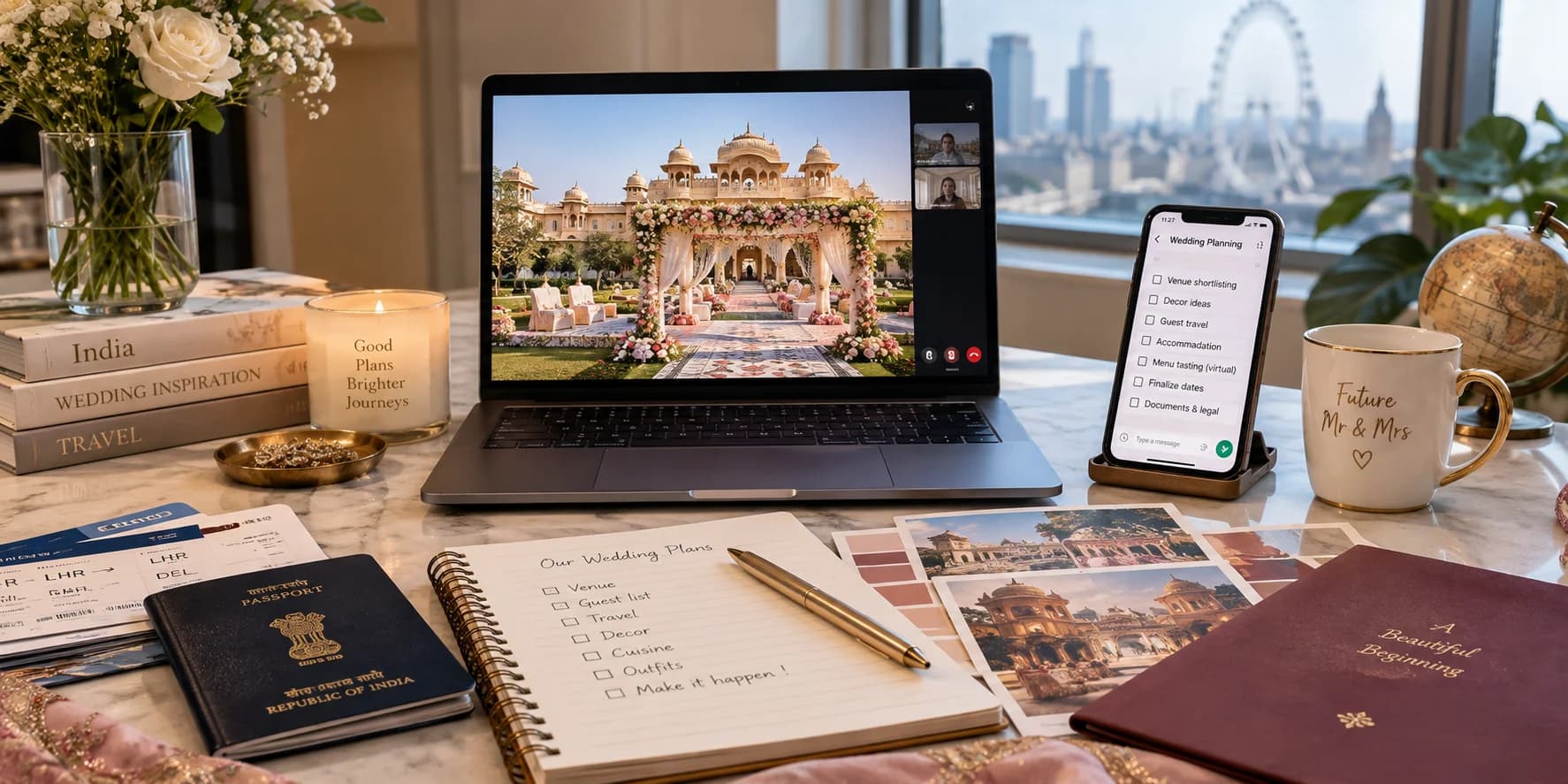
Your venue shortlist lives in a WhatsApp folder. Your caterer is a name your cousin recommended. And you have never actually stood in the courtyard where you are supposed to get married. Here is the honest, detailed answer to whether that is a problem, and exactly how NRI couples pull this off every wedding season.
Quick Facts Before You Read On
- Venues, vendors, and contracts can all be finalised over video calls and recorded walkthroughs.
- Marriage registration or civil solemnisation in India usually requires in-person appearance by both partners at some stage. Timing depends on the applicable law, state process, and local registrar.
- Many NRI couples instead register their marriage in their home country first, then travel to India purely for the celebration.
- Remote planning takes longer at the decision stage, so start 8 to 18 months ahead depending on venue category and season.
- A local planner functions as your eyes on the ground, which matters more the less you are able to visit.
When you are planning from another country, keeping all the bookings, deadlines and decisions in one place can make things much easier.

Sample Remote Planning Timeline
| Timing | What to focus on |
| 12 to 18 months before | Choose your destination and rough dates, select a planner, set an initial budget, and begin a guest count estimate |
| 10 to 12 months before | Shortlist and confirm your venue through video walkthroughs, pay the deposit, and block hotel rooms for guests |
| 8 to 10 months before | Send save the dates, begin legal paperwork if applicable, and book flights for immediate family early |
| 6 to 8 months before | Finalise decor and theme, review catering options over video, and confirm your key vendors |
| 4 to 6 months before | Guests apply for visas if needed, finalise the guest list and function schedule, and confirm arrival logistics |
| 2 to 3 months before | Make milestone vendor payments, confirm all legal documents are in order, and prepare guest itineraries |
| 3 to 4 weeks before | Your planner completes the final on-ground quality check of venue and vendor setups |
| Wedding week | You arrive, complete any required marriage registration, do final approvals in person, and celebrate |
Why Remote Booking Actually Works
Ten years ago, this question had a much shakier answer. Today, Indian wedding venues, especially the ones used to NRI clients, run on infrastructure built for exactly this situation. Five star resorts and heritage palaces have dedicated wedding coordinators who do video walkthroughs weekly.
Vendors quote in multiple currencies. Contracts move over email and e-signature where the venue or vendor accepts it, instead of a physical file. This is not a workaround anymore. It is how many Indian destination weddings now get booked.
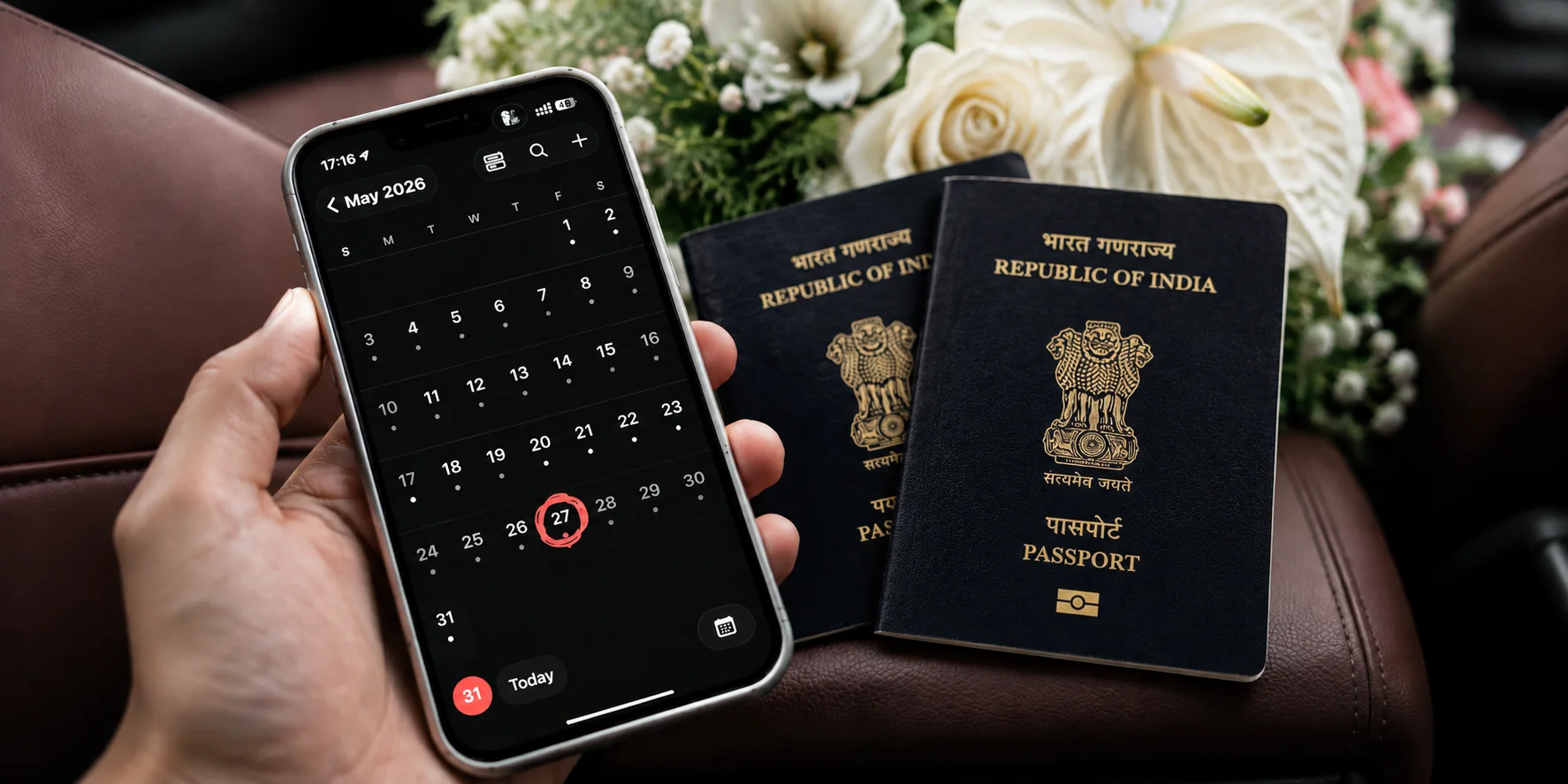
The deeper reason it works is that a wedding has two very different phases. The planning phase can be remote, while the celebration and any required legal appearance need you there. The planning phase, choosing a venue, picking vendors, signing contracts, approving a decor concept, is fundamentally a series of decisions.
What You Can Book and Finalise 100 Percent Remotely
Most NRI couples are surprised by how much of the wedding planning can be handled without visiting India in advance. The key is to know what can be managed online and what still needs someone physically present on the ground.
| Can be finalised remotely | Needs someone physically present |
| Venue shortlisting and comparison through photos, videos, and calls | Final venue quality check before the wedding setup begins |
| Live video walkthroughs of shortlisted venues | Physical check of fabric, print, decor, and setup samples |
| Video-based venue reviews with room, lawn, beach, and banquet area walkthroughs | Food tasting and menu review, if the family wants a real-time experience |
| Vendor portfolio review for decor, photography, catering, and entertainment | Final vendor walkthrough before the wedding functions |
| Contract review, negotiation, and e-signature | Wedding day setup approval and on-ground coordination |
| Deposit and milestone payments through bank transfer or forex platforms | Guest arrival, room handover, and local support at the venue |
| Decor mood boards, colour palettes, and theme planning | Marriage registration, where the couple may need to appear personally |
| Guest list planning, invitation design, and RSVP tracking | Last-minute venue, vendor, or logistics checks before the event |
This makes the planning process clearer. You can manage most decisions remotely, but a trusted local planner or family member still plays an important role in checking the real experience on the ground.
Venue selection without setting foot on the property
This is the step couples worry about most, and it is also the most solved problem in remote planning today. A good venue coordinator or planner will do a live video call where someone physically walks the property with a phone or gimbal, while you direct where to look, how a space sounds, where the sun sets relative to your ceremony time, and how far the getting-ready rooms are from the mandap or altar.

Pair that with a separately recorded drone tour and a detailed floor plan, and you get a far more accurate picture than a same-day in-person visit often gives, since you can rewatch it, share it with family, and compare it side by side with other shortlisted venues.For couples still comparing locations, this guide to destination wedding venues in jaipur can make the venue shortlisting process easier.
Vendors, decor, and catering
Photographers and videographers are booked almost entirely on portfolio review and a video call today, in India and everywhere else. Decorators work from mood boards, reference photos, and a detailed brief, then send render concepts or previous real-wedding setups for approval before your event.
Caterers can walk you through a proposed menu on video, describe preparation and plating, and share photos or short videos of past events at a similar guest count.
What Realistically Still Needs You in India
Being straightforward here matters more than sounding reassuring. Two things do not fully collapse into a video call, and pretending otherwise sets couples up for a stressful surprise.
1. Marriage registration
Indian marriage registration and civil solemnisation usually require the couple to appear in person for at least one registrar-facing step. The exact number of visits depends on the law and state process. Under the Special Marriage Act, the notice stage and final solemnisation follow a defined timeline.
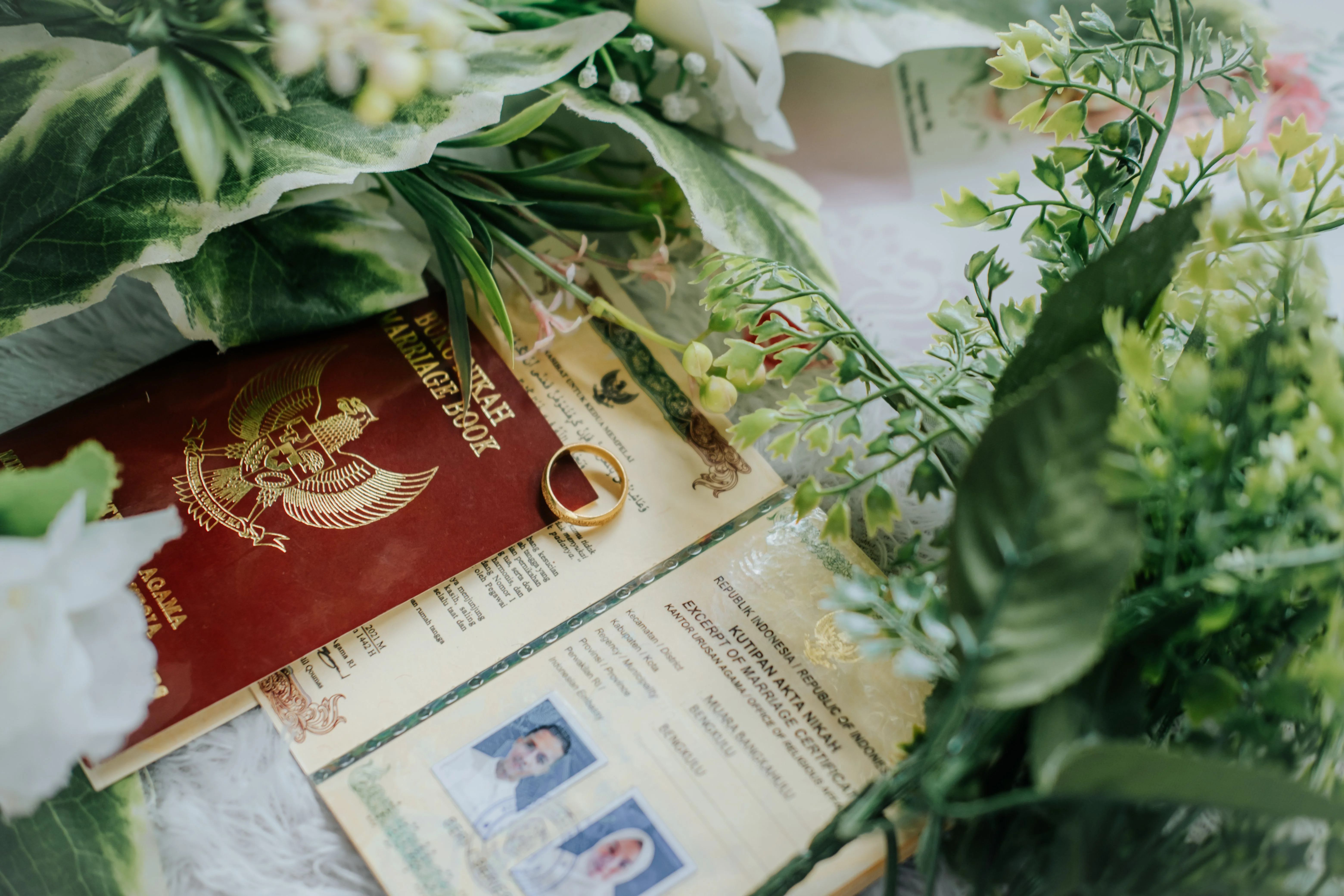
Under a personal law like the Hindu Marriage Act, the religious ceremony comes first and registration is handled according to the local registrar's process. We cover this in full detail in our goa marriage legal requirements guide and the same core planning principle applies across most of India: confirm the legal route before you book travel.
2. A trained eye physically checking the details before your event
A video call can show you that a stage exists. It cannot always show you that the fabric texture matches your mood board, that the flower shade in person is the same as it looked on screen, or that a nearby construction project has started since your last walkthrough.
This is not a reason to abandon remote planning, it is the reason experienced NRI couples work with a planner who visits the venue and vendors in person on their behalf, even when the couple themselves never does.
Step by Step: How Remote Booking Actually Works
1. Define your brief
Share your guest count, approximate budget, preferred destination or region, and rough dates with your planner. This single document becomes the filter for everything that follows.
2. Get a shortlist, not a single suggestion
A good planner returns three to six venues that actually match your brief, with pricing, photos, and availability, not a single "trust me" recommendation.
3. Schedule live video walkthroughs
Book calls around your time zone, not theirs. For each shortlisted venue, ask for a live walkthrough plus a separately recorded drone or 360 degree tour you can revisit later.
4. Review asynchronously with your family
Share the recorded footage in a group chat or shared drive so parents and close family can weigh in without needing to join every call live, which matters a lot across time zones.
5. Get an itemised quote, not a bundled number
Ask for costs broken into venue, catering, decor, and any mandatory charges, so you can compare venues fairly and negotiate specific line items.
For couples considering a palace or heritage celebration, a wedding planner in jaipur can also help compare venue inclusions, decorator costs, guest movement, vendor access, and local coordination before you approve anything remotely.
6. Sign digitally and pay the deposit
Review the contract carefully, confirm cancellation and rescheduling terms, then sign through a digital signature platform and pay the deposit by bank wire to the vendor's verified business account.
7. Repeat the process for major vendors
Photography, decor, and catering typically follow the same shortlist, review, quote, sign pattern as the venue itself.
8. Set a recurring check-in, not ad hoc calls
A fixed weekly or biweekly call with your planner, supplemented by written updates, keeps the process moving without turning every small decision into a scheduling puzzle.
9. Let your planner do the final on-ground check
In the weeks before the wedding, your planner physically verifies setup, decor samples, and vendor readiness, and flags anything that needs your decision before you arrive.
When everything is being planned remotely, keeping track of confirmed bookings, pending approvals and payments helps both families stay updated.
Marriage Registration Without a Separate Trip
This is the section most blogs either skip entirely or wave away with "consult a lawyer." Here is what actually happens in practice.
Path 1: Register during the wedding week itself
Since you are already travelling to India for the wedding, many couples simply schedule their registration steps during that trip. If you are marrying under a personal law, such as a Hindu ceremony, the marriage is typically complete once the essential rites are performed.
You then register it afterward to receive your certificate, subject to the local registrar's documents and appearance requirements. If the Special Marriage Act or another civil route applies, build the required timeline into your travel dates well in advance.
Path 2: Register in your home country first, celebrate in India
A significant number of NRI couples register their marriage legally in the UK, US, UAE, or wherever they are based, through that country's own civil registration process, and then travel to India purely for the ceremony and celebration.
This route sidesteps India's in-person registration requirement entirely, since your marriage is already legally recognised before you land. It also tends to simplify visa and immigration paperwork back home, since you are not waiting on an Indian certificate to process spousal documentation.
What about proxy marriage?
Some couples ask whether a Power of Attorney can let a representative complete registration on their behalf, so that neither of them needs to be present. In practice, this is not a standard or reliable route for Indian marriage registration. Registrar-facing steps normally expect the couple to appear, and any exception would need specific legal advice and approval. Do not build your travel plans around the assumption that a proxy route will be accepted.
For a full breakdown of documents, apostille versus attestation, and country specific requirements for the UK, US, and UAE, our NRI wedding planning guide for Jaipur covers this in depth, and the same document logic applies regardless of which Indian destination you choose.
Tools That Make Remote Planning Possible
| Need | What couples typically use |
| Live venue walkthroughs | A video call app such as Zoom or Google Meet, often with the person on-site using a gimbal or stabiliser for smoother footage |
| Recorded property tours | Drone footage and 360 degree virtual tours shared as a video file or an interactive link |
| Day to day coordination | WhatsApp or WhatsApp Business, since most Indian vendors already work through it |
| Document and photo sharing | A shared drive folder, organised by vendor, so family members can review without repeated forwarding |
| Contracts | PDF contracts signed through a digital signature platform where accepted by the venue or vendor |
| Payments | Bank wire transfer or a forex remittance platform, sent directly to the vendor's business account |
| Design and mood boards | Pinterest boards or a simple shared presentation for decor, outfits, and colour direction |
How to Review a Venue or Vendor You Have Never Seen
Remote planning is safe, but it does reward a bit of healthy scepticism. Use this checklist before you commit to anything.
- Ask for a live, unedited walkthrough, not just a marketing reel. A polished Instagram video tells you almost nothing about scale, noise, or neighbouring properties. A live call where you can ask questions in real time tells you a lot.
- Request recent real-wedding references, ideally from another NRI couple who planned remotely, and ask if you can message them directly.
- Check business registration and GST details before making any payment. A legitimate vendor will have this ready without hesitation.
- Get the contract before the deposit, never the other way around, and read the cancellation and rescheduling clauses closely.
- Confirm who is accountable for a final on-site check before your event, whether that is your planner, a venue coordinator, or both.
- Be cautious of pressure to pay in full upfront. Staged payments tied to planning milestones are standard practice and protect you if something changes.
- Speak to the actual venue manager or lead vendor at least once, not only a sales representative, before signing.
Paying Indian Vendors From Abroad
Most couples pay Indian vendors through a standard bank wire transfer or a forex remittance platform, sent directly to the vendor's business account in a currency agreed on at the time of the contract. Money sent from your UK, US, or UAE account into India for wedding expenses is an inward remittance.
Always ask for a proper invoice and GST details wherever GST is charged, both for your own records and because documentation is sometimes needed back home. For the fuller currency, exchange rate, and time zone breakdown, see our complete NRI wedding planning guide .
Mistakes Couples Make When Booking Remotely
| Mistake | Why it causes problems | How to avoid it |
| Booking a venue from photos alone | Marketing photography can flatter scale, lighting, and surroundings | Always insist on a live, unedited video walkthrough before paying a deposit |
| Paying the full amount upfront | Leaves you with little leverage if plans or quality expectations change | Negotiate staged payments tied to planning milestones |
| Assuming registration can happen without both of you present | Leads to last-minute scrambling or a missed legal deadline | Confirm the exact registration requirement early and build it into your travel dates |
| Coordinating five vendors directly across time zones | Creates scheduling chaos and inconsistent decisions | Route communication through one planner who manages every vendor relationship |
| Skipping a final on-ground quality check | Small decor or setup issues go unnoticed until the day itself | Have your planner physically verify setup in the final week before the wedding |
| Starting the process too late | Remote decisions take longer, and popular venues book out early | Start 8 to 18 months ahead depending on season and venue category |
Why a Local Planner Matters More When You Are Not Visiting
A local planner becomes more important when you are planning from abroad. Video calls can help, but someone still needs to visit venues, check vendors, review setups, and manage details on the ground.
For coastal weddings, a wedding planner in Goa can help check beach access, resort rules, weather backup, guest travel, vendor setup, and local permissions before you arrive.
Wedmyday helps NRI couples plan with guided video walkthroughs, clear vendor coordination, and a simple planning process.
Planning from abroad and have not visited yet?
Tell us your destination, guest count, and rough dates. We will set up video walkthroughs of shortlisted venues around your time zone, so you can start comparing real options this week.
Final Thoughts
Yes, NRIs can plan a destination wedding in India without visiting in advance. Venue shortlisting, vendor meetings, decor planning, payments, and contracts can be managed through video calls and a trusted local planner.
The legal part may still need your presence, but with the right timeline, it does not always require a separate planning trip. The smoothest weddings happen when couples start early, ask for live walkthroughs, pay in stages, and keep one planner accountable