
Planning a Hindu wedding in 2026 starts with one practical question: which dates are considered auspicious for marriage?
This guide gives you a month-by-month list of shubh vivah dates, explains why several months have no listed muhurats, and shows why different websites may publish slightly different calendars.
2026 Vivah Muhurat at a Glance
| Month | Auspicious dates | Planning note |
| January 2026 | 0 | No shubh vivah muhurat in the Jaipur reference calendar |
| February 2026 | 12 | Highest number of dates in this reference calendar |
| March 2026 | 8 | Dates available in the first half of the month |
| April 2026 | 8 | Dates resume after the prohibited solar month |
| May 2026 | 8 | Dates are concentrated before Adhik Maas |
| June 2026 | 8 | Dates resume after Adhik Maas |
| July 2026 | 5 | Short window before Guru Asta and Chaturmas |
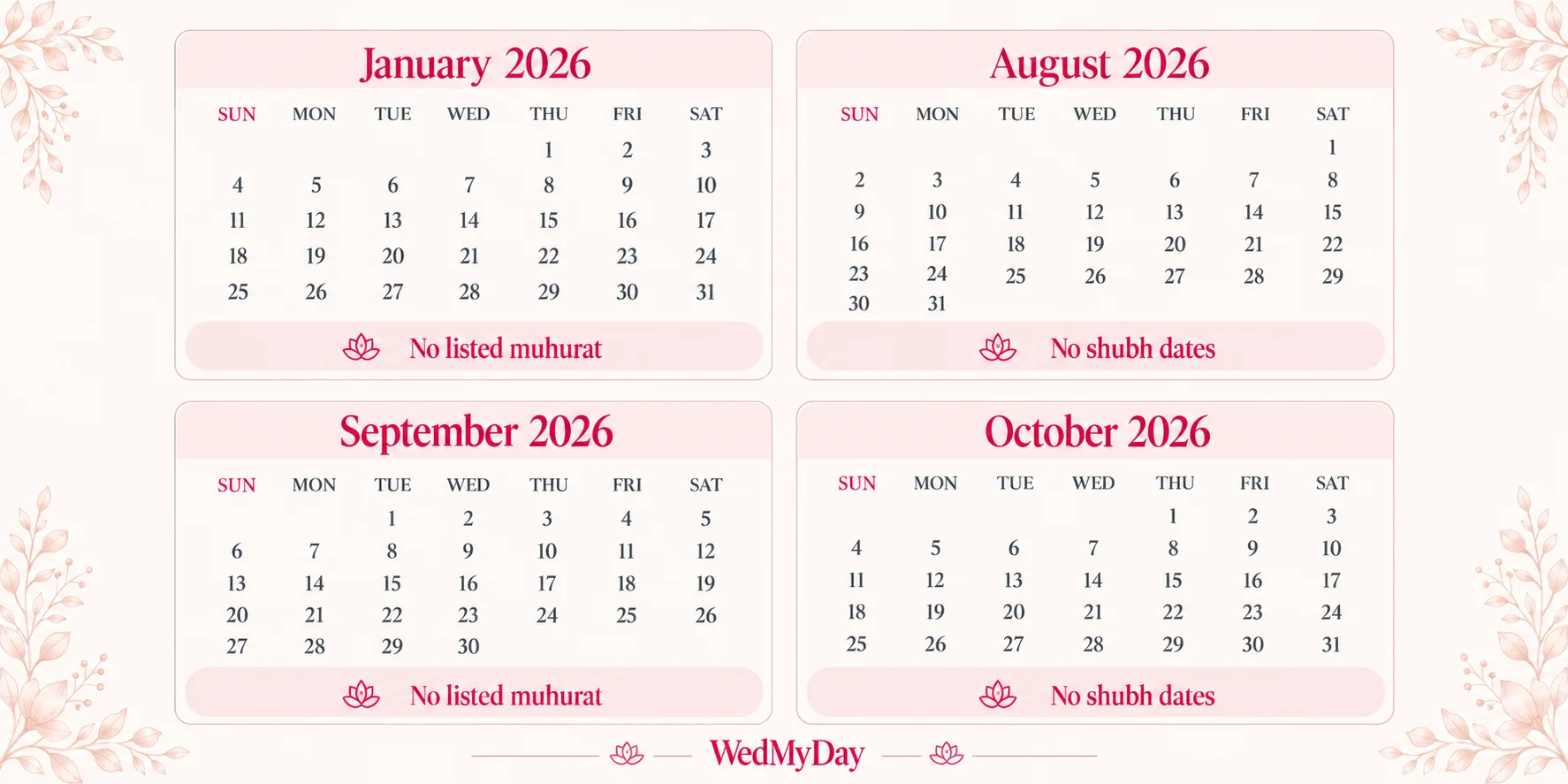
| August 2026 | 0 | No shubh vivah muhurat in this reference calendar |
| September 2026 | 0 | No shubh vivah muhurat in this reference calendar |
| October 2026 | 0 | No shubh vivah muhurat in this reference calendar |
| November 2026 | 4 | Wedding season resumes after Devutthana Ekadashi |
| December 2026 | 7 | Seven listed dates in the first half of the month |
What Is a Vivah Muhurat?
A vivah muhurat is an auspicious date and time selected for a Hindu marriage ceremony. In traditional Panchang-based selection, astrologers consider factors such as Tithi, Nakshatra, Yoga, Karana, weekday, solar and lunar month, and whether important planets such as Venus and Jupiter are considered combust.
Personalised selection can go further by checking the couple's birth charts and the Lagna at the time of the ceremony.
Different schools of astrology and regional traditions do not always produce an identical list. That is why a responsible wedding-date guide should state its reference city and methodology rather than present one calendar as universal for every family in India.
January 2026: No Listed Shubh Vivah Muhurat
The Jaipur reference calendar does not list an auspicious marriage date in January 2026. Drik Panchang shows Venus, or Shukra, in Asta for the month, with the combustion period ending at the end of January. In the first few days after Shukra Uday, the calendar also applies a Shishutva period before regular marriage muhurats resume.
February 2026 Wedding Dates: 12 Auspicious Days
February has the widest choice in this reference calendar, with 12 listed dates. The first usable date is February 5. This is an important correction from older or location-mixed lists that include February 3 and 4.
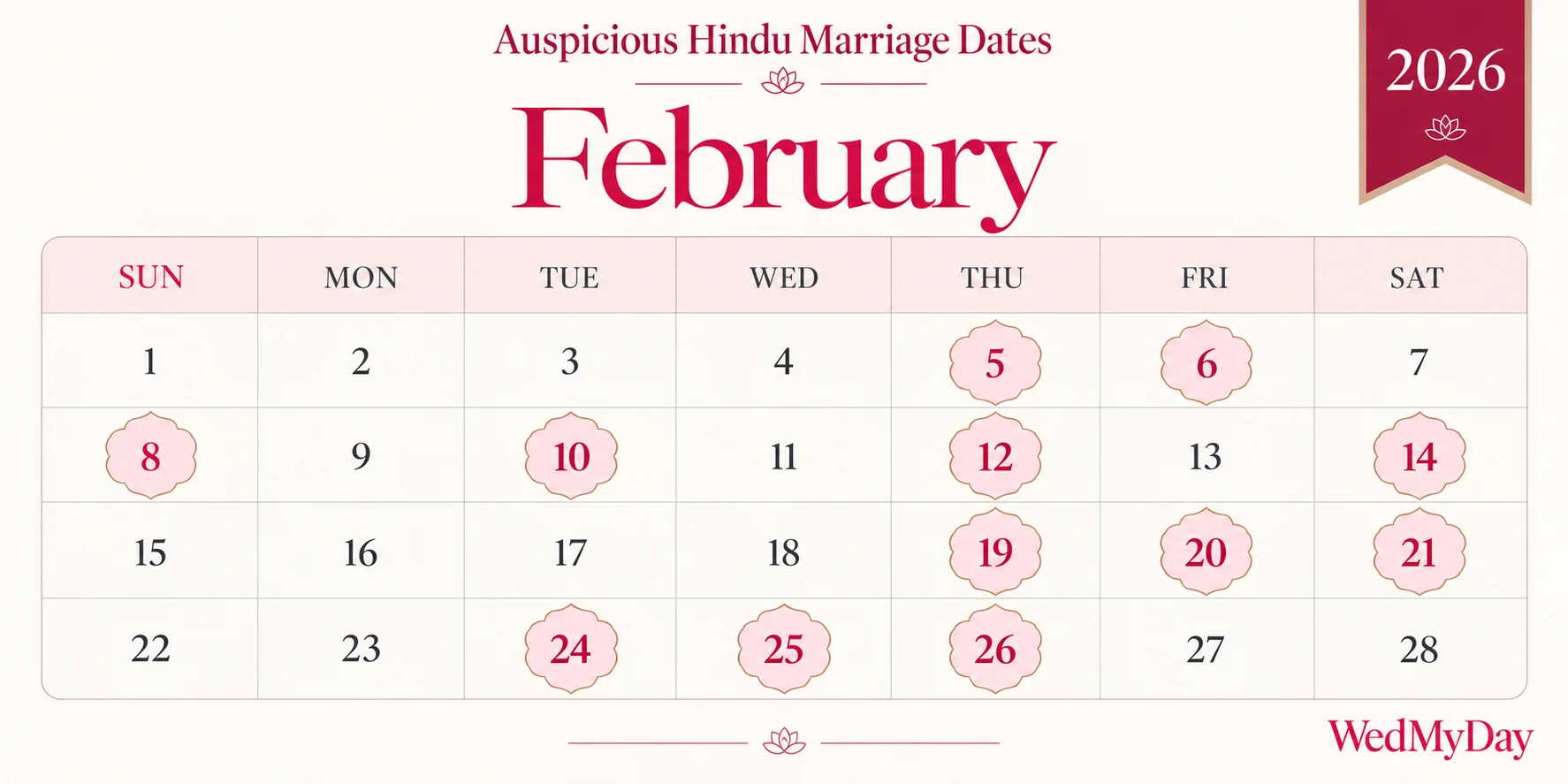
| Date | Day | Nakshatra | Tithi |
| Feb 5, 2026 | Thursday | Uttara Phalguni, Hasta | Chaturthi, Panchami |
| Feb 6, 2026 | Friday | Hasta | Panchami |
| Feb 8, 2026 | Sunday | Swati | Saptami |
| Feb 10, 2026 | Tuesday | Anuradha | Navami |
| Feb 12, 2026 | Thursday | Mula | Ekadashi |
| Feb 14, 2026 | Saturday | Uttara Ashadha | Trayodashi |
| Feb 19, 2026 | Thursday | Uttara Bhadrapada | Tritiya |
| Feb 20, 2026 | Friday | Uttara Bhadrapada, Revati | Tritiya, Chaturthi |
| Feb 21, 2026 | Saturday | Revati | Panchami, Chaturthi |
| Feb 24, 2026 | Tuesday | Rohini | Navami |
| Feb 25, 2026 | Wednesday | Mrigashira | Navami, Dashami |
| Feb 26, 2026 | Thursday | Mrigashira | Dashami |
March 2026 Wedding Dates: 8 Auspicious Days
March offers eight listed dates, all before the traditional prohibited solar period begins in the middle of the month. The useful window is concentrated in the first half of March.
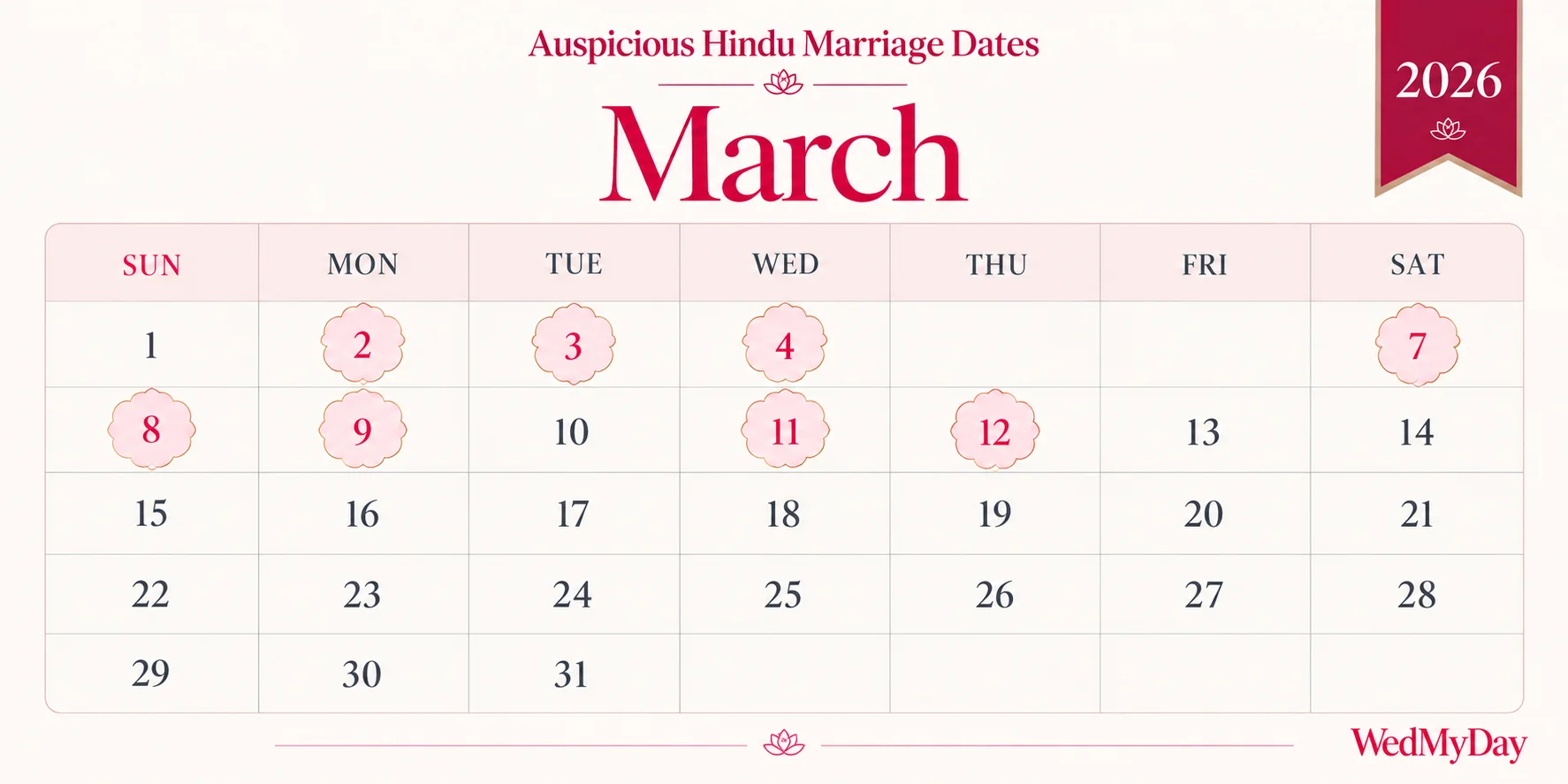
| Date | Day | Nakshatra | Tithi |
| Mar 2, 2026 | Monday | Magha | Chaturdashi, Purnima |
| Mar 3, 2026 | Tuesday | Magha | Purnima |
| Mar 4, 2026 | Wednesday | Uttara Phalguni | Pratipada |
| Mar 7, 2026 | Saturday | Swati | Chaturthi, Panchami |
| Mar 8, 2026 | Sunday | Swati | Panchami |
| Mar 9, 2026 | Monday | Anuradha | Shashthi |
| Mar 11, 2026 | Wednesday | Mula | Navami |
| Mar 12, 2026 | Thursday | Mula | Navami |
April 2026 Wedding Dates: 8 Auspicious Days
April opens after the prohibited solar month ends around mid-April in many North Indian traditions. Eight dates are listed from April 15 onward.
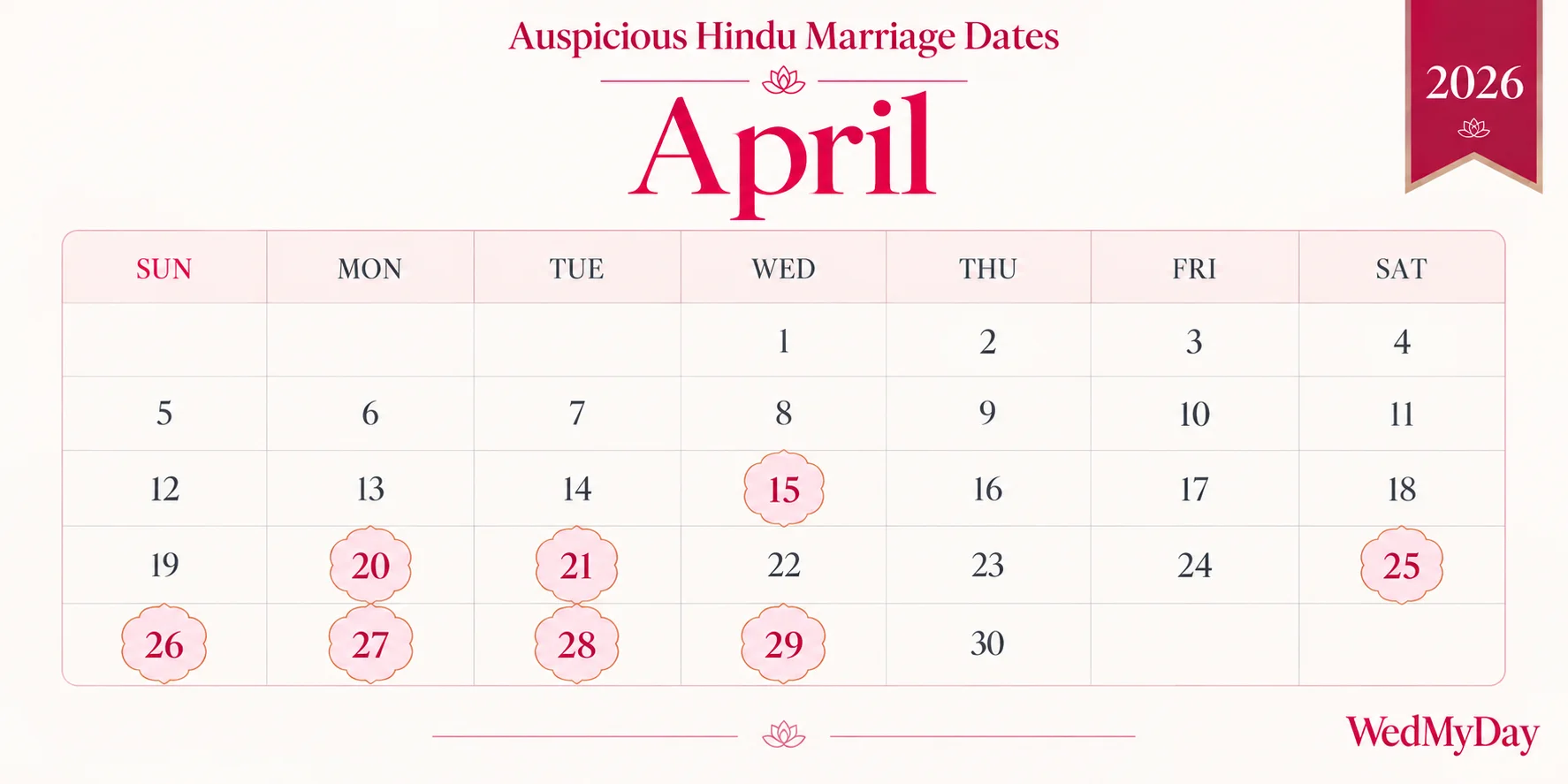
| Date | Day | Nakshatra | Tithi |
| Apr 15, 2026 | Wednesday | Uttara Bhadrapada | Trayodashi |
| Apr 20, 2026 | Monday | Rohini, Mrigashira | Tritiya, Chaturthi, Panchami |
| Apr 21, 2026 | Tuesday | Mrigashira | Panchami |
| Apr 25, 2026 | Saturday | Magha | Dashami |
| Apr 26, 2026 | Sunday | Magha | Dashami, Ekadashi |
| Apr 27, 2026 | Monday | Uttara Phalguni, Purva Phalguni | Dwadashi |
| Apr 28, 2026 | Tuesday | Uttara Phalguni, Hasta | Trayodashi |
| Apr 29, 2026 | Wednesday | Hasta | Trayodashi, Chaturdashi |
May 2026 Wedding Dates: 8 Auspicious Days
May has eight listed dates, all before Adhik Maas begins. Adhik Maas starts on May 17, 2026, so the marriage-date window is concentrated in the first half of the month.
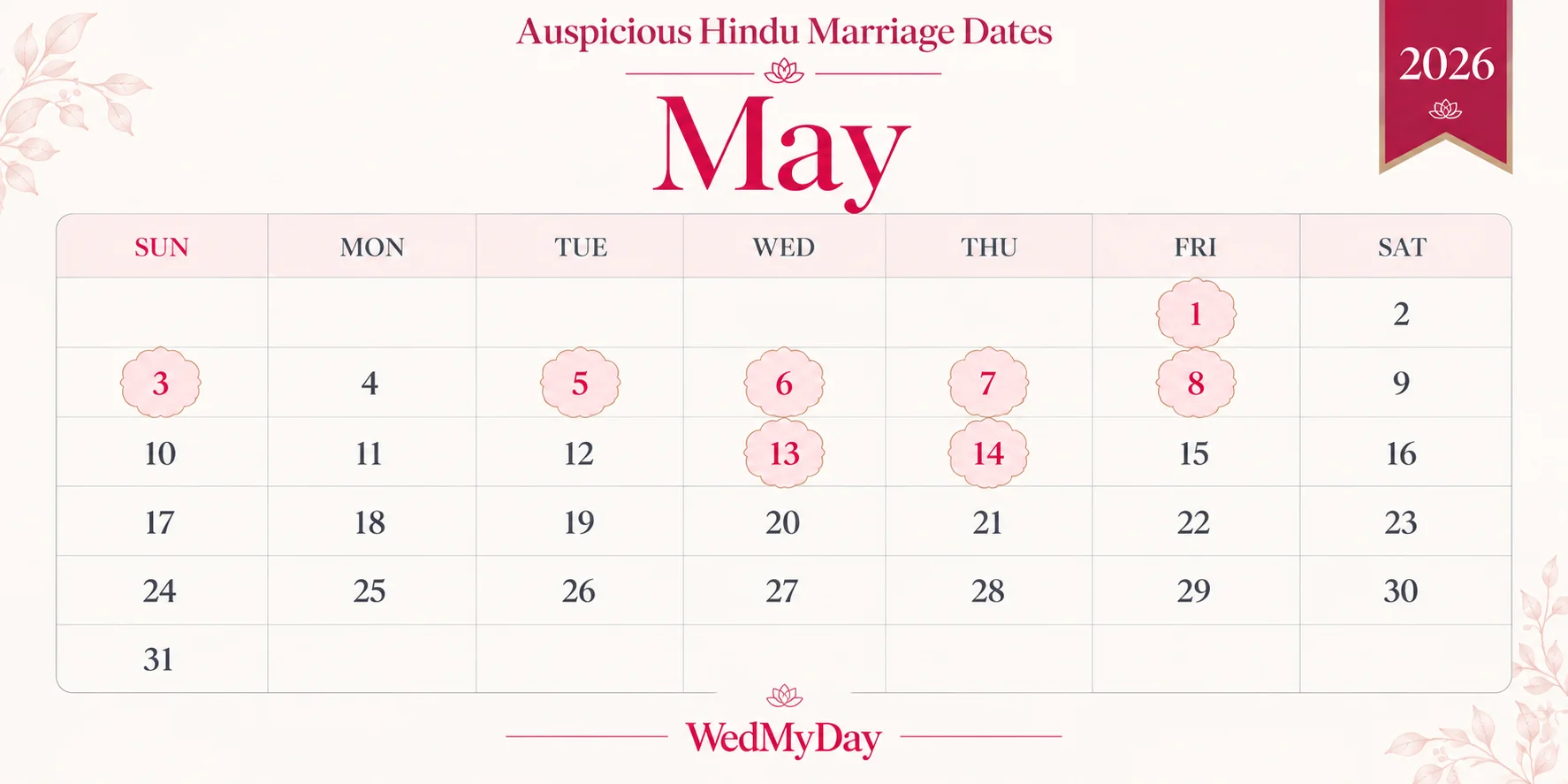
| Date | Day | Nakshatra | Tithi |
| May 1, 2026 | Friday | Swati | Purnima |
| May 3, 2026 | Sunday | Anuradha | Dwitiya |
| May 5, 2026 | Tuesday | Mula | Chaturthi |
| May 6, 2026 | Wednesday | Mula | Chaturthi, Panchami |
| May 7, 2026 | Thursday | Uttara Ashadha | Shashthi |
| May 8, 2026 | Friday | Uttara Ashadha | Shashthi |
| May 13, 2026 | Wednesday | Uttara Bhadrapada, Revati | Dwadashi |
| May 14, 2026 | Thursday | Revati | Dwadashi, Trayodashi |
June 2026 Wedding Dates: 8 Auspicious Days
Adhik Maas continues through June 15, 2026. After it ends and the remaining Panchang filters clear, eight marriage dates are listed from June 21 to June 29.
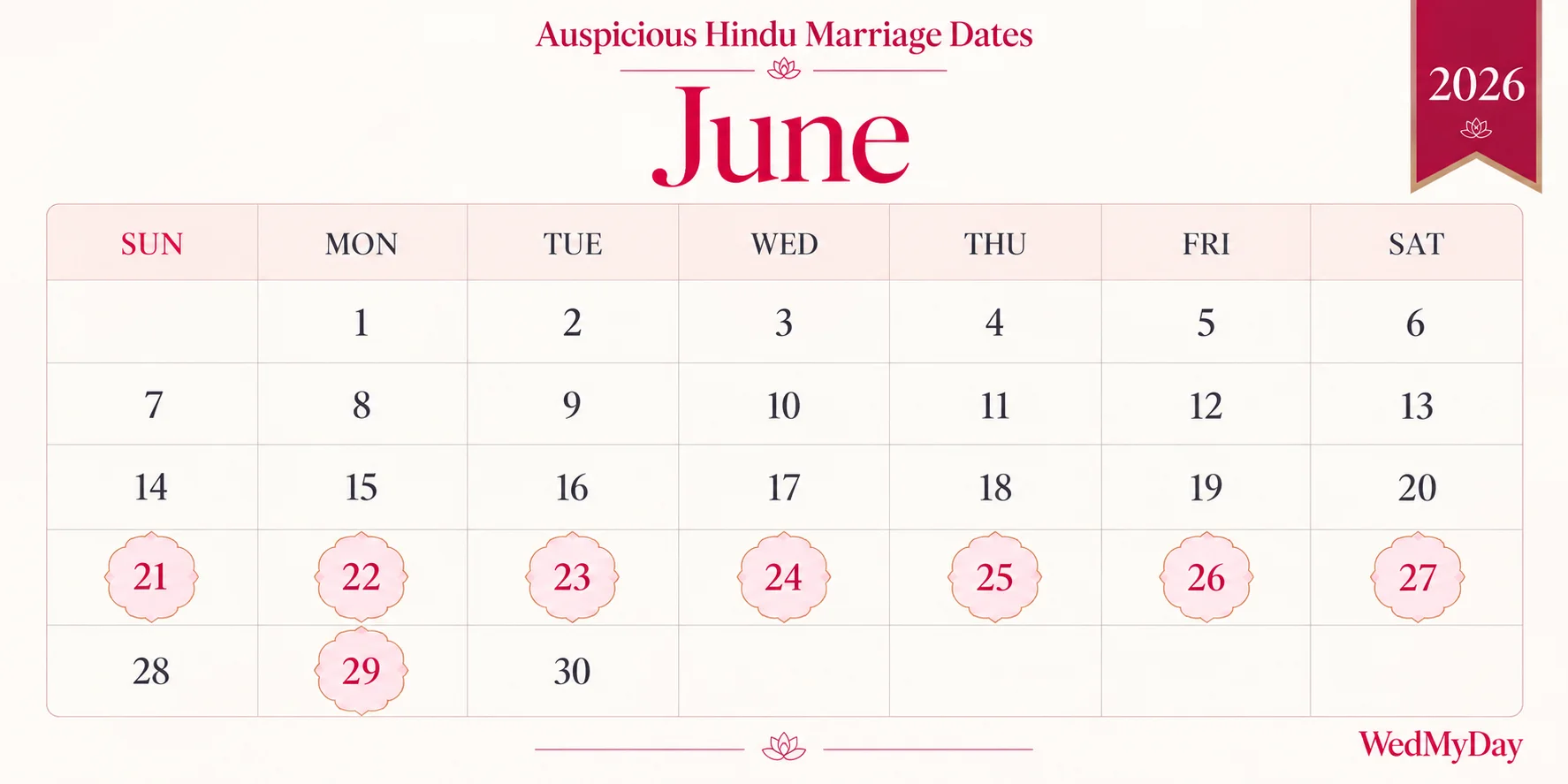
| Date | Day | Nakshatra | Tithi |
| Jun 21, 2026 | Sunday | Uttara Phalguni | Saptami |
| Jun 22, 2026 | Monday | Hasta | Ashtami, Navami |
| Jun 23, 2026 | Tuesday | Hasta | Navami |
| Jun 24, 2026 | Wednesday | Swati | Dashami, Ekadashi |
| Jun 25, 2026 | Thursday | Swati | Ekadashi |
| Jun 26, 2026 | Friday | Anuradha | Dwadashi, Trayodashi |
| Jun 27, 2026 | Saturday | Anuradha | Trayodashi |
| Jun 29, 2026 | Monday | Mula | Purnima |
July 2026 Wedding Dates: 5 Auspicious Days
July has a short marriage window. Five dates are listed up to July 12. The Jaipur reference calendar then marks July 13 to 15 under Vriddhatva Brihaspati and July 16 onward under Guru Tara Asta before Chaturmas begins later in the month.
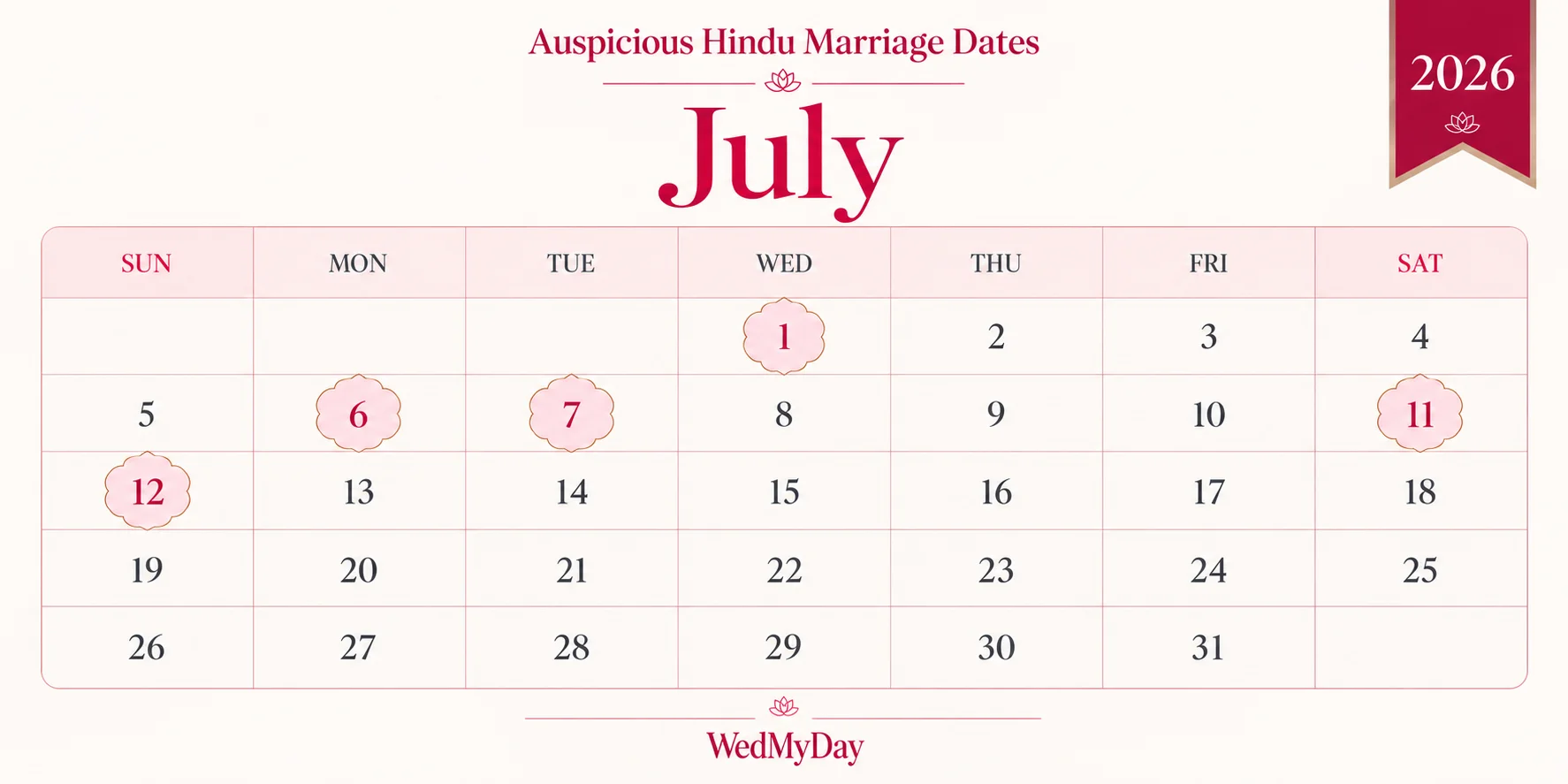
| Date | Day | Nakshatra | Tithi |
| Jul 1, 2026 | Wednesday | Uttara Ashadha | Dwitiya |
| Jul 6, 2026 | Monday | Uttara Bhadrapada | Saptami |
| Jul 7, 2026 | Tuesday | Uttara Bhadrapada | Saptami, Ashtami |
| Jul 11, 2026 | Saturday | Rohini | Dwadashi, Trayodashi |
| Jul 12, 2026 | Sunday | Rohini, Mrigashira | Trayodashi |
January, August, September and October 2026: No Listed Marriage Muhurat
There are no listed shubh vivah dates in August, September or October in the Jaipur reference calendar. This long pause is connected mainly with Chaturmas, which begins with Devshayani Ekadashi on July 25, 2026 and continues until Devutthana Ekadashi in November.
Guru Asta also overlaps the beginning of this period, and Venus becomes combust again during part of October.
This is where many wedding websites become confusing. Some publish "popular wedding dates" for these months based on weekends, numerology, venue demand or editorial preference. Those dates are not the same thing as classical shubh vivah muhurat dates. If your family follows a traditional Panchang, keep the two categories separate.
November 2026 Wedding Dates: 4 Auspicious Days
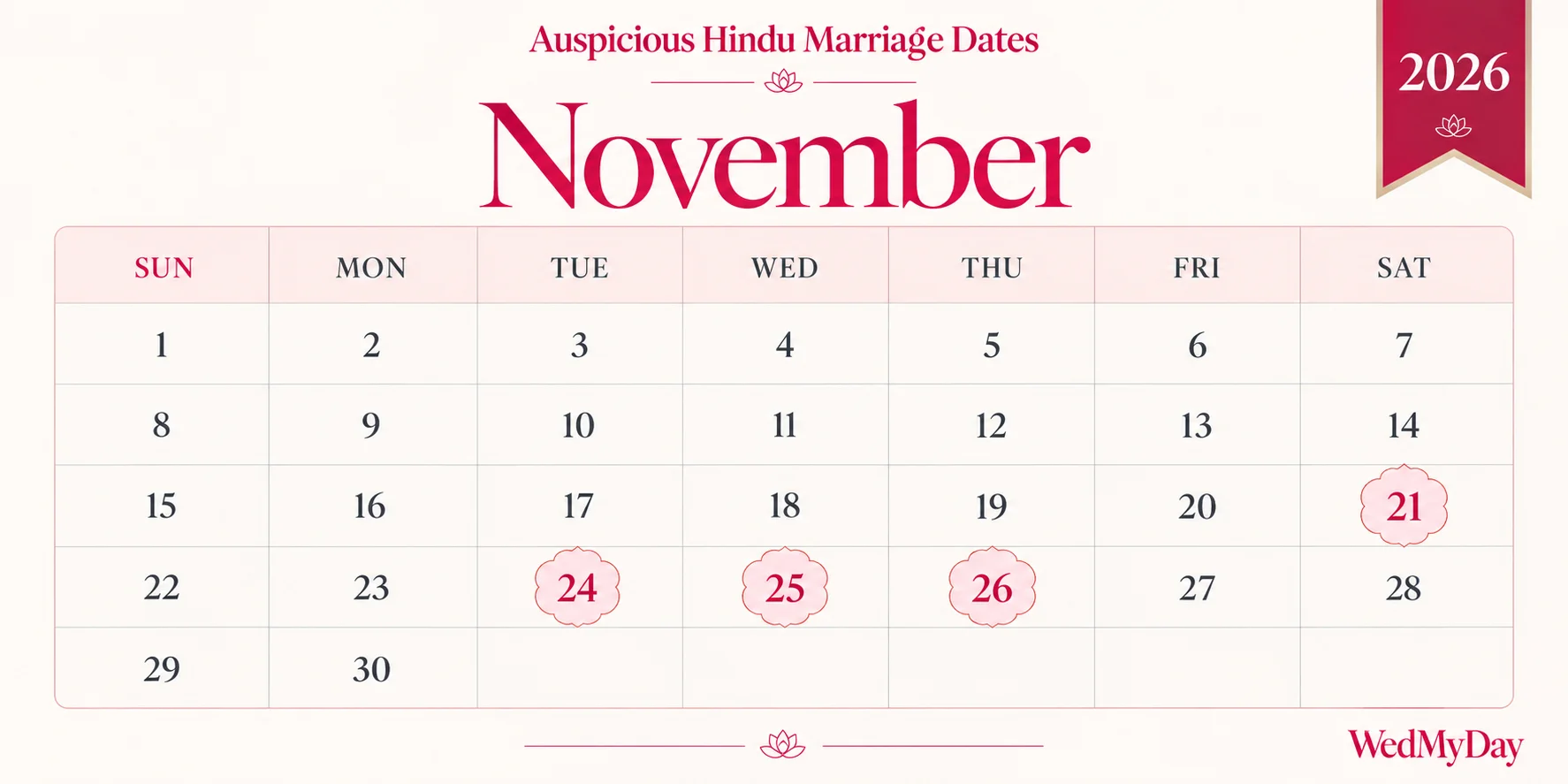
Chaturmas ends around Devutthana Ekadashi on November 20, with November 20 only partially clear in the Jaipur reference. The first listed marriage date is November 21, followed by three more dates later in the month.
| Date | Day | Nakshatra | Tithi |
| Nov 21, 2026 | Saturday | Revati | Dwadashi |
| Nov 24, 2026 | Tuesday | Rohini | Pratipada |
| Nov 25, 2026 | Wednesday | Rohini, Mrigashira | Pratipada, Dwitiya |
| Nov 26, 2026 | Thursday | Mrigashira | Dwitiya, Tritiya |
December 2026 Wedding Dates: 7 Auspicious Days
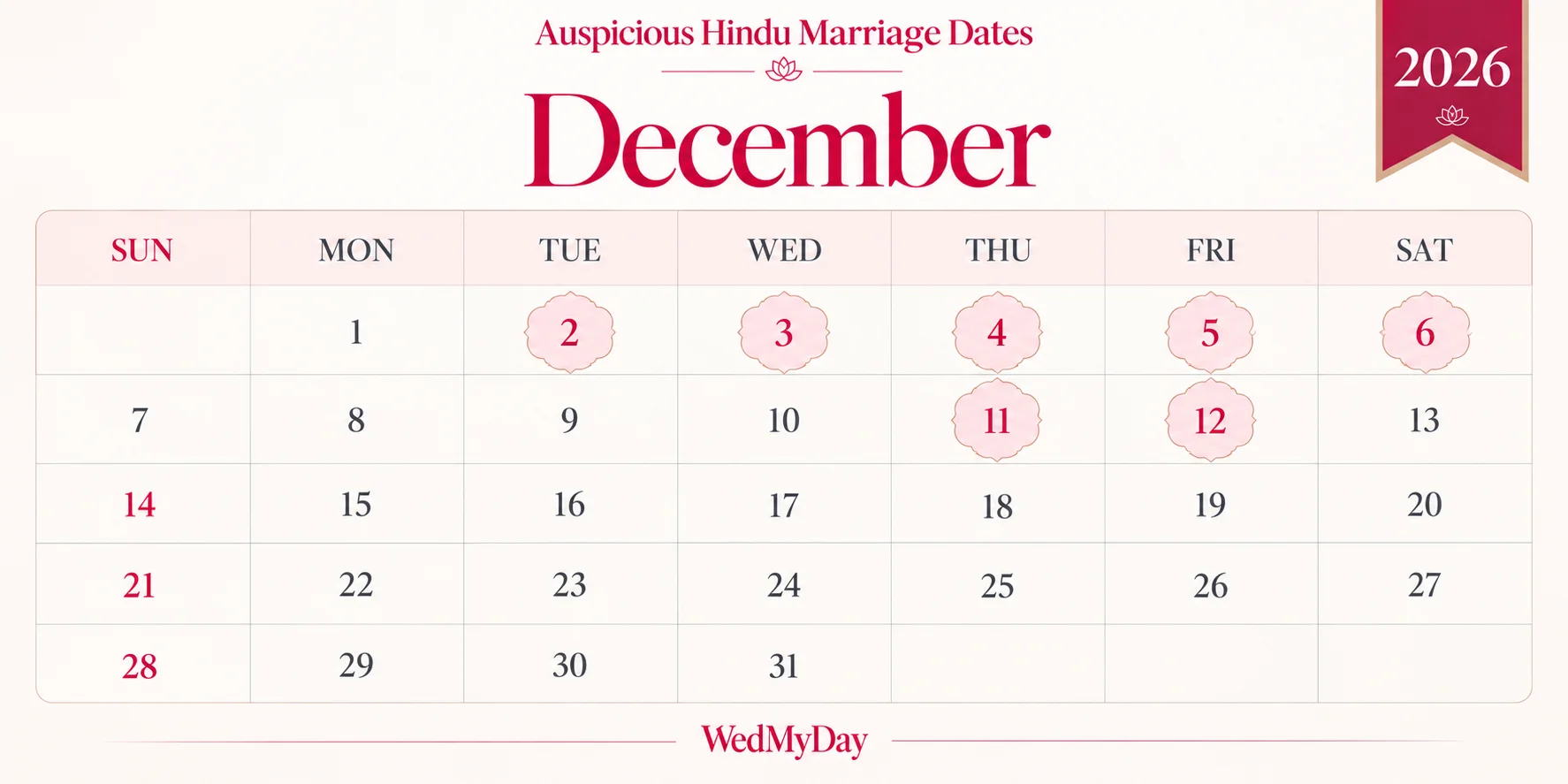
December provides seven listed dates, all in the first half of the month. The last listed date is December 12. Khar Maas begins later in mid-December in many North Indian traditions, while the days immediately before it still depend on the normal Panchang filters.
| Date | Day | Nakshatra | Tithi |
| Dec 2, 2026 | Wednesday | Uttara Phalguni | Navami, Dashami |
| Dec 3, 2026 | Thursday | Uttara Phalguni, Hasta | Dashami, Ekadashi |
| Dec 4, 2026 | Friday | Hasta | Ekadashi |
| Dec 5, 2026 | Saturday | Swati | Dwadashi, Trayodashi |
| Dec 6, 2026 | Sunday | Swati | Trayodashi |
| Dec 11, 2026 | Friday | Uttara Ashadha | Tritiya |
| Dec 12, 2026 | Saturday | Uttara Ashadha | Tritiya, Chaturthi |
Why Different Websites Show Different 2026 Wedding Dates
You may compare two highly ranked articles and see different totals. That does not always mean one is careless. It can happen because the reference location, tradition or filtering method is different. It can also happen because some wedding platforms mix classical muhurats with popular or high-demand dates.
- Location matters. Panchang calculations use local sunrise and astronomical conditions. A date available in Bengaluru can be excluded in Jaipur, and the exact time window can shift materially.
- Methodology matters. Some calendars use Panchang Shuddhi only, while more detailed methods also apply Lagna Shuddhi, birth-chart matching and additional dosha checks.
- Regional customs matter. North Indian, South Indian and community-specific traditions do not always use the same restrictions.
- Popular dates are not automatically muhurat dates. A Saturday, a memorable number or a high-demand venue date can be popular without being listed as a classical marriage muhurat.
Why Some Months Have No Wedding Dates in 2026
1. Shukra Asta: Venus Is Combust
In Vedic astrology, Venus is associated with marriage, relationships and comfort. Traditional muhurat systems commonly avoid weddings while Venus is combust. In the 2026 Jaipur reference calendar, this is the main reason January has no listed dates. The first February dates are also filtered by the short Shishutva period after Venus becomes visible again.
2. Guru Asta: Jupiter Is Combust
Jupiter is another planet commonly checked in traditional marriage muhurat. In the Jaipur reference calendar, the July marriage window ends after July 12. July 13 to 15 are marked under Vriddhatva Brihaspati, followed by Guru Tara Asta from July 16.
3. Adhik Maas
Adhik Maas is the additional lunar month that periodically keeps the lunar calendar aligned with the solar year. In 2026 it runs from May 17 through June 15. Classical marriage calendars generally avoid weddings during this period, which explains the long gap between the last May date and the first June date.
4. Chaturmas
Chaturmas begins with Devshayani Ekadashi on July 25, 2026. Devutthana Ekadashi falls on November 20, with the following day also observed by some Vaishnava traditions. Many Hindu communities traditionally pause major samskaras such as marriage during this period. In the Jaipur reference calendar, the first post-Chaturmas marriage date is November 21.
5. Khar Maas or Prohibited Solar Months
In many North Indian traditions, weddings are avoided while the Sun transits Sagittarius and Pisces. These periods fall roughly from mid-December to mid-January and from mid-March to mid-April. The exact practice varies by region, so couples should follow their family tradition rather than assume this restriction is universal across India.
How Is a Vivah Muhurat Calculated?
There is no single factor that makes a date auspicious. Panchang-based selection usually filters a date through several layers before a marriage window is considered usable.
- Tithi: The lunar day is checked for suitability and for the exact period in which it operates.
- Nakshatra: The Moon's lunar mansion is an important filter. Certain Nakshatras are traditionally preferred for marriage.
- Yoga and Karana: These Panchang elements are checked for combinations that classical muhurat systems treat as favourable or unfavourable.
- Vara or weekday: The weekday can influence the final selection depending on the school of astrology being followed.
- Solar and lunar month: Periods such as Adhik Maas, Chaturmas and prohibited solar months can remove otherwise promising dates.
- Shukra and Guru visibility: Traditional systems commonly exclude periods when Venus or Jupiter is combust, and may also apply brief maturity periods after they rise.
- Personalised Lagna and Kundali checks: For a final wedding muhurat, many families also check the couple's birth charts and the ascendant during the ceremony.
Nakshatras Commonly Considered Favourable for Marriage
Traditional marriage calendars repeatedly use a group of Nakshatras that are commonly considered suitable for vivah. The exact result still depends on the Tithi, Yoga, Karana and other filters operating at the same time.
- Rohini
- Mrigashira
- Magha
- Uttara Phalguni
- Hasta
- Swati
- Anuradha
- Mula
- Uttara Ashadha
- Uttara Bhadrapada
- Revati
Practical Tips for Choosing Your 2026 Wedding Date
- Shortlist two or three dates. High-demand muhurats can create pressure on venue, photographer and planner availability. A backup date gives you negotiating flexibility.
- Confirm the wedding city before checking the exact time. The date list is a starting point. Final muhurat hours should be calculated for the actual ceremony location.
- Do not assume every weekend is a muhurat. Weekend convenience and astrological suitability are different filters.
- Check family tradition early. If your families follow different regional Panchangs, resolve the preferred method before paying non-refundable deposits.
- Align the muhurat with logistics. A late-night or pre-dawn window changes the guest schedule, catering, transport and venue booking hours.
- Book faster for February, November and December. These cooler-season dates are typically easier to plan for destination weddings and can attract stronger venue demand.
Final Takeaway
The best way to use a 2026 marriage-date calendar is to treat it as the first layer of planning, not the final decision. Shortlist dates from a consistent Panchang, check availability with your venue and planner, and then confirm the exact muhurat for the wedding city and your family tradition. This approach gives you both cultural confidence and a smoother planning process.