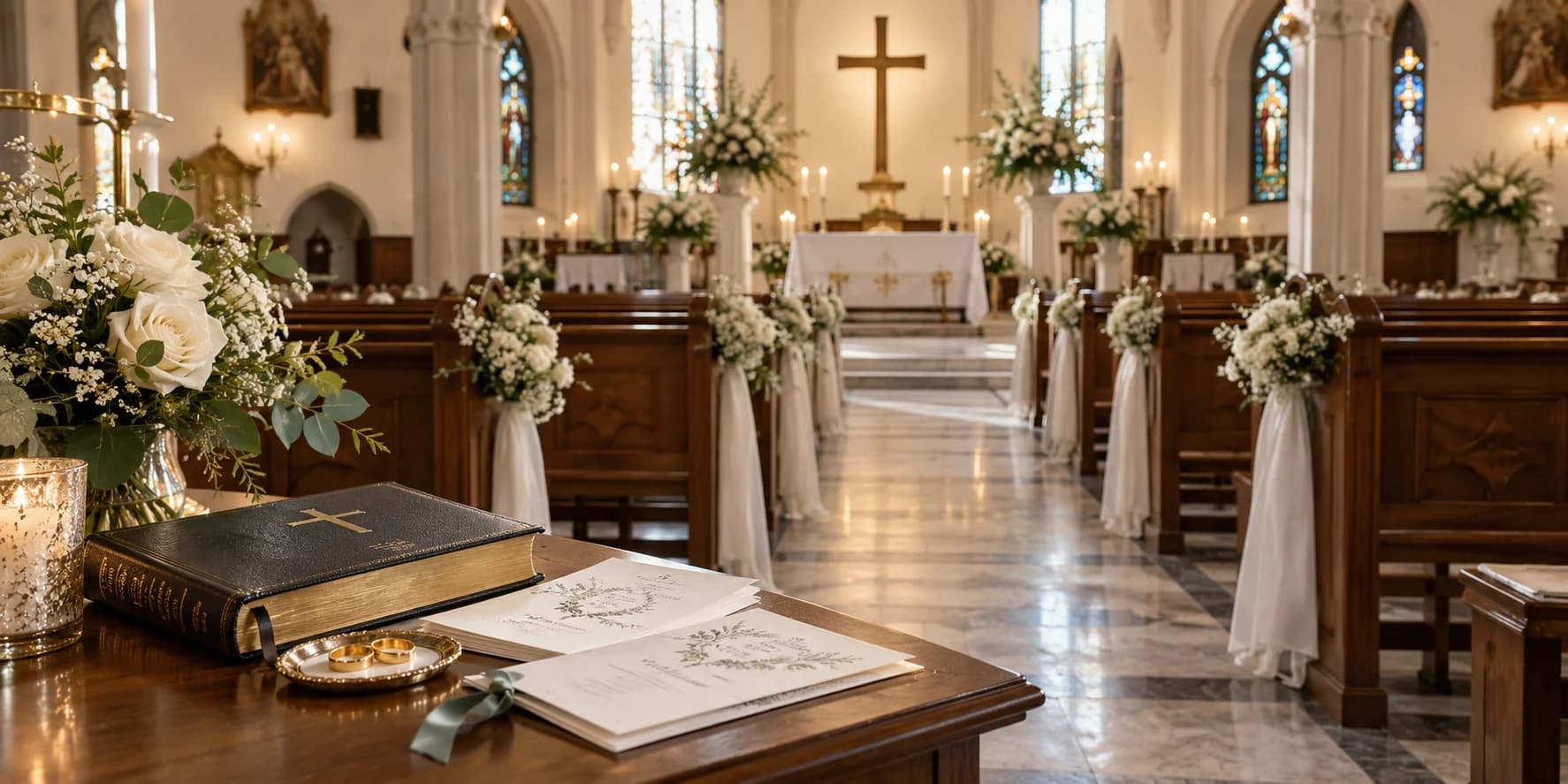
A Christian wedding is a sacred promise made before God, your family and your church community. It is also a big event with many moving parts. Between church paperwork, banns, premarital classes, outfits, food and the reception, it is easy to feel lost.
This Christian wedding checklist breaks everything into simple steps. You will find a 12 month timeline, the documents most churches ask for, a ceremony order, budget tips and a final week plan. Use it as your single guide from engagement to the honeymoon.
Christian Wedding Checklist at a Glance
- 12 to 10 months before: Set budget, guest list, church and date.
- 9 to 7 months before: Book venue, photographer, caterer and start premarital course.
- 6 to 4 months before: Finalise outfits, invitations, music and readings.
- 3 to 2 months before: Submit documents, arrange banns and confirm vendors.
- 1 month to 1 week before: Rehearsal, final payments, seating and packing.
- Wedding day: Follow a written timeline and let one trusted person manage it.
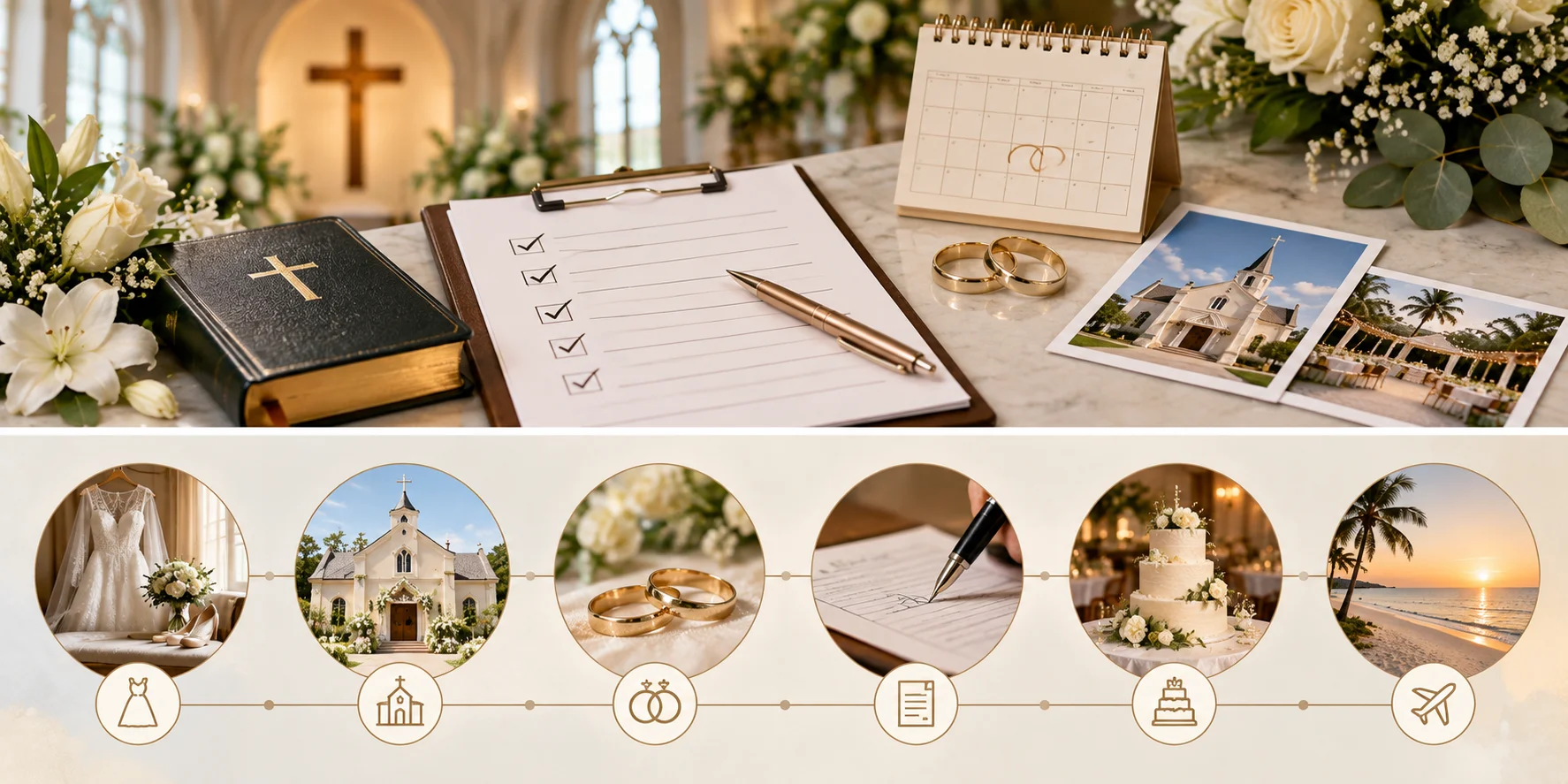
Before You Start: Understand Your Church Rules
Christian weddings are not the same everywhere. A Catholic wedding, a CSI wedding, a Marthoma wedding, a Baptist wedding and a Pentecostal wedding can differ in paperwork, timing, music and even who can officiate. Many churches also have their own rules on decorations, photography, flower use and outside vendors.
Your first step is simple. Meet your parish priest or pastor, tell them your preferred months, and ask for their written list of requirements. This meeting can help you avoid expensive changes later.

12 to 10 Months Before the Wedding
1. Talk about the big picture together
Sit down as a couple and agree on the kind of wedding you want. Discuss the guest count, the budget, the city, and how much your families will contribute. Honest talks at this stage prevent arguments later.
2. Set your total budget
Decide a total number first, then divide it across categories. A common split looks like this:
- Around 40 to 50% of the budget may go toward the reception venue and catering.
- Outfits, jewellery and beauty: 10 to 15 percent
- Photography and videography: 8 to 12 percent
- Decor and flowers: 8 to 10 percent
- Church donation, music and invitations: 5 to 8 percent
- Travel, stay and gifts: 5 to 8 percent
- Emergency fund: 5 to 10 percent
Always keep a small buffer. Almost every wedding crosses its budget by a little.
3. Meet your priest or pastor and book the church
Ask about available dates, the ceremony time, the cost of church hall or donation, and whether the church allows decorations, a choir, a live band and videography. Book the church before anything else, since everything else depends on that date.
4. Make a first guest list
Write down every name, then group them as must invite, should invite and nice to invite. Your guest count decides your venue size and your catering cost, so be realistic.
5. Choose a wedding date with care
Check these points before you lock a date:
- Church calendar, including Lent, Advent and Holy Week, when many churches avoid weddings
- Exams, festivals and long weekends that affect guest travel
- Weather, as monsoon weddings need extra planning for travel and outdoor decor
- Availability of close family members
9 to 7 Months Before the Wedding
1. Book the reception venue
Whether you choose a banquet hall, resort, lawn or the church hall, visit in person. Ask about power backup, parking, rooms for the bride and groom, the end time and any extra charges. Use this wedding venue checklist to compare options and ask the right questions.
2. Start premarital counselling
Most churches require couples to attend a marriage preparation course. It usually covers communication, finances, family life, faith and raising children. Many couples find it the most useful part of the whole journey. Ask your church when the next batch begins, as some courses run only a few times a year and the certificate is needed for your file.
3. Hire the key vendors
Book these early, because good vendors get fully booked months ahead:
- Photographer and videographer
- Caterer
- Decorator and florist
- Makeup artist and hairstylist
- Wedding band, DJ or emcee for the reception
- Wedding cake baker
Always sign a written agreement. It should list the date, timings, services, total cost, advance paid and the refund policy.
4. Begin outfit shopping
Brides usually choose a white or ivory gown or a white saree, while grooms wear a suit, tuxedo or a formal outfit. In many communities, couples also plan an outfit for the engagement and the reception. Allow at least four months for stitching, fittings and alterations.
5. Plan the engagement or betrothal
If your engagement has not happened yet, fix its date now. Many Christian families hold a betrothal or ring ceremony in church or at home, followed by a small meal. Check how it fits into your church's process, as some churches treat it as a formal step before banns.
6 to 4 Months Before the Wedding
1. Plan the ceremony with your priest or pastor
This is where the wedding becomes personal. Decide the Bible readings, hymns, who will read, and whether you will write your own vows or use the traditional ones. Ask your priest what is allowed, as some churches use a fixed liturgy.
2. Choose your wedding party
Select the best man, maid of honour, groomsmen, bridesmaids, flower girls and ring bearer. Tell them their roles clearly and share the dress code and dates early.
3. Finalise the church music
Speak to the choir director or organist. Pick songs for the processional, the offertory, communion if applicable, and the recessional. Share the final song list with the church at least a month ahead.
4. Order invitations and send save the dates
Send save the dates 4 to 6 months before, especially if guests will travel. If you are planning your celebration in Goa, this destination wedding checklist for goa can also help you organise guest travel, accommodation and other important planning tasks
5. Book accommodation and travel
If guests are coming from other cities, block rooms in nearby hotels. Arrange cars for the couple and for elderly relatives. Plan your honeymoon dates and bookings now, so flights and hotels remain affordable.
6. Plan the wedding rings and jewellery
Order wedding bands with enough time for sizing and engraving. Many couples also choose a pair of matching rings for the church exchange. Buy any bridal jewellery now and keep it safely stored.

Christian Wedding Documents Checklist
Paperwork is the part most couples leave too late. The exact list changes with your denomination, diocese and state, so treat the following as a general guide and confirm it with your church office.
Documents commonly required by churches
- Baptism certificate for both bride and groom, often a recently issued copy
- Confirmation certificate, where applicable
- Proof of age, such as a birth certificate or school leaving certificate
- Proof of address, such as an Aadhaar card, passport, or voter ID
- Passport size photographs
- Premarital course certificate
- Letter of freedom or no objection certificate if either partner belongs to a different parish
- Death certificate of a former spouse or a divorce decree if either was married before, and your priest will guide you on church approval
- Parental consent or approval letters, if asked
- Two witnesses with valid ID
What are banns?
Banns are a public announcement of your intended marriage, usually made in church on three Sundays before the wedding. Couples are often asked to complete them in the parish of both partners. Check with your church about when the banns need to start, so you have enough Sundays before the wedding.
Legal registration of the marriage
In India, Christian marriages are generally governed by the Indian Christian Marriage Act, 1872, and the church register entry is an important record. Many couples also register the marriage with the local marriage registrar to get a government issued marriage certificate, which is needed for visas, name changes, insurance and bank documents. Rules vary by state, so check the process with your church and the local registrar's office well before the wedding.If you are getting married in goa, understanding the goa marriage certificate process in advance can also make the paperwork easier after the wedding

3 to 2 Months Before the Wedding
1. Submit your documents to the church
Hand over all documents and keep a photocopy and a digital scan of each. Ask the church office for a written confirmation that your file is complete.
2. Confirm banns and rehearsal dates
Get the exact Sundays for banns and the date and time for the rehearsal. Share these with your wedding party and parents.
3. Fix your menu
Do a tasting with your caterer. Choose a menu that includes both vegetarian and non-vegetarian options, while also keeping children, elders, and guests with special dietary needs in mind. Confirm the number of plates and the serving staff count.
4. Finalise decor and flowers
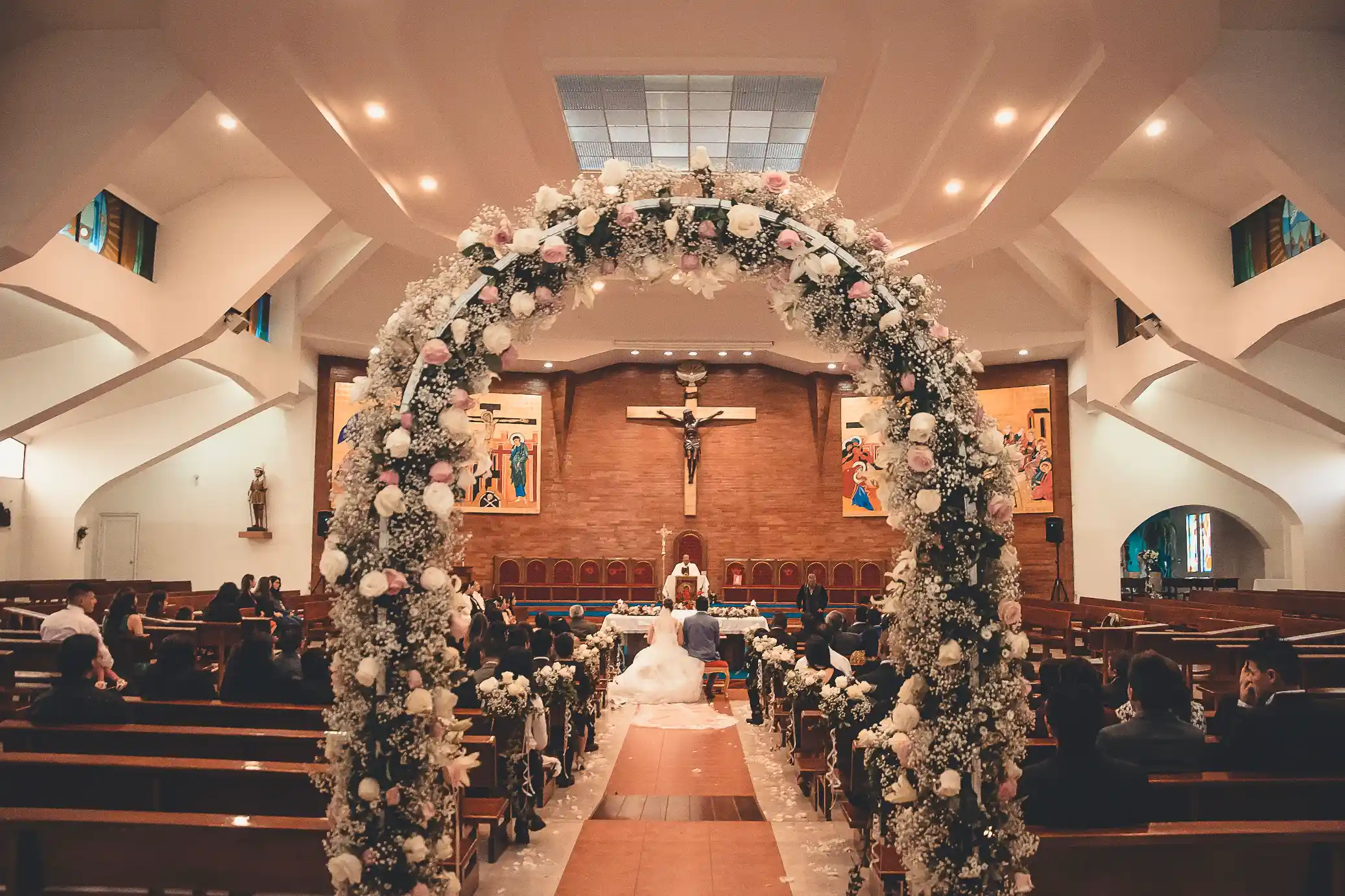
Share church decor rules with your decorator. Most churches keep decor simple: flowers on pews, the aisle, altar and the entrance. Ask if flower petals, candles or aisle runners are allowed.
5. Do outfit trials
Attend at least two fittings. Carry your wedding shoes, veil, innerwear and accessories to the final trial so that everything fits together.
6. Plan wedding favours and gifts
Think of small thank you gifts for your parents, bridal party, priest or pastor, choir and special helpers. Many couples also give a small gift to those who helped with the church preparation.
1 Month Before the Wedding
1. Confirm every vendor in writing
Call each vendor and confirm the date, timing, venue address and the person in charge on the day. Share a one page schedule with all of them.
2. Finalise the seating plan
Prepare a reception seating plan, with family tables near the stage. Keep elderly guests close to the entrance and washrooms.
3. Make the final payment plan
List every pending payment, due date and amount. Keep cash or UPI ready for final settlements and small tips. Hand the envelopes to a trusted relative to deliver on the day.
4. Write your vows and prepare readings
If your church allows personal vows, write them now and practise out loud. Keep them short, sincere and easy to say. Share the readings with the people who will read them, so they can practise too.
5. Apply for the marriage certificate, if required
Check whether your registrar needs an advance application. Some offices need a notice period, so do this early.
Christian Wedding Ceremony Order
The order differs by denomination, but most Christian wedding ceremonies follow this flow. Ask your priest or pastor for the exact order, so you can plan the music and photography around it.If the church ceremony is followed by an outdoor or coastal celebration in goa, these beach wedding planning tips can help you think about weather, timing, permissions and guest comfort.
1. Processional: The wedding party, the groom and then the bride, often with her father or family, walk down the aisle.
2. Welcome and opening prayer: The priest or pastor greets the guests and begins with a prayer.
3. Hymn or song: The congregation or choir sings a chosen hymn.
4. Bible readings: Selected passages are read, often from Genesis, Corinthians, Ephesians or the Gospels.
5. Sermon or homily: The priest or pastor shares a short message on marriage and faith.
6. Declaration of consent: The couple states that they have come freely to be married.
7. Exchange of vows: The couple promises love and faithfulness to each other.
8. Blessing and exchange of rings: The rings are blessed and placed on each other's fingers.
9. Prayers and blessing: The congregation prays for the couple and the priest gives a blessing.
10. Signing of the register: The couple, the priest and two witnesses sign.
11. Pronouncement of marriage: The couple is declared husband and wife.
12. Recessional: The newlyweds walk out first, followed by the wedding party and family.
Some weddings also include a unity candle, a communion service, a thread or veil ceremony, or a special prayer by the parents. Include only what feels meaningful and what your church allows.
1 Week Before the Wedding
1. Attend the rehearsal
Walk through the ceremony in the church with your priest, wedding party and parents. Practise the entry, standing positions, ring exchange and exit. A good rehearsal calms nerves more than anything else.
2. Pack the wedding day kit
Keep these items in one bag:
- Rings, marriage documents and ID copies
- Outfits, shoes, veil, innerwear and accessories
- Makeup, hair pins, safety pins, a sewing kit and tissues
- Medicines, a pain relief tablet and a small first aid kit
- Snacks, water and a phone charger
- Printed schedule and vendor phone numbers
- Envelopes for tips, donation and vendor payments
3. Appoint a point person
If you are planning the wedding from another city or managing several vendors, hiring a wedding planner in goa can also make vendor coordination and wedding-day execution easier.
4. Rest well
Eat on time, sleep early and say your prayers. A calm mind makes the day feel special instead of rushed.
Wedding Day Timeline Example
Use this sample timeline and adjust it to your church timing.
- 6:00 am: Wake up, light breakfast, start getting ready
- 8:00 am: Makeup and hair done, outfits worn
- 9:30 am: Photographer captures getting ready and family photos
- 10:30 am: Reach the church, groom and bridal party take positions
- 11:00 am: Wedding ceremony begins
- 12:15 pm: Ceremony ends, register signed, photos outside the church
- 1:00 pm: Travel to the reception venue
- 1:30 pm: Cake cutting, toasts, lunch and blessings
- 4:00 pm: Send off for the couple
Evening weddings follow a similar pattern, with the ceremony usually in the late afternoon and a dinner reception afterwards.
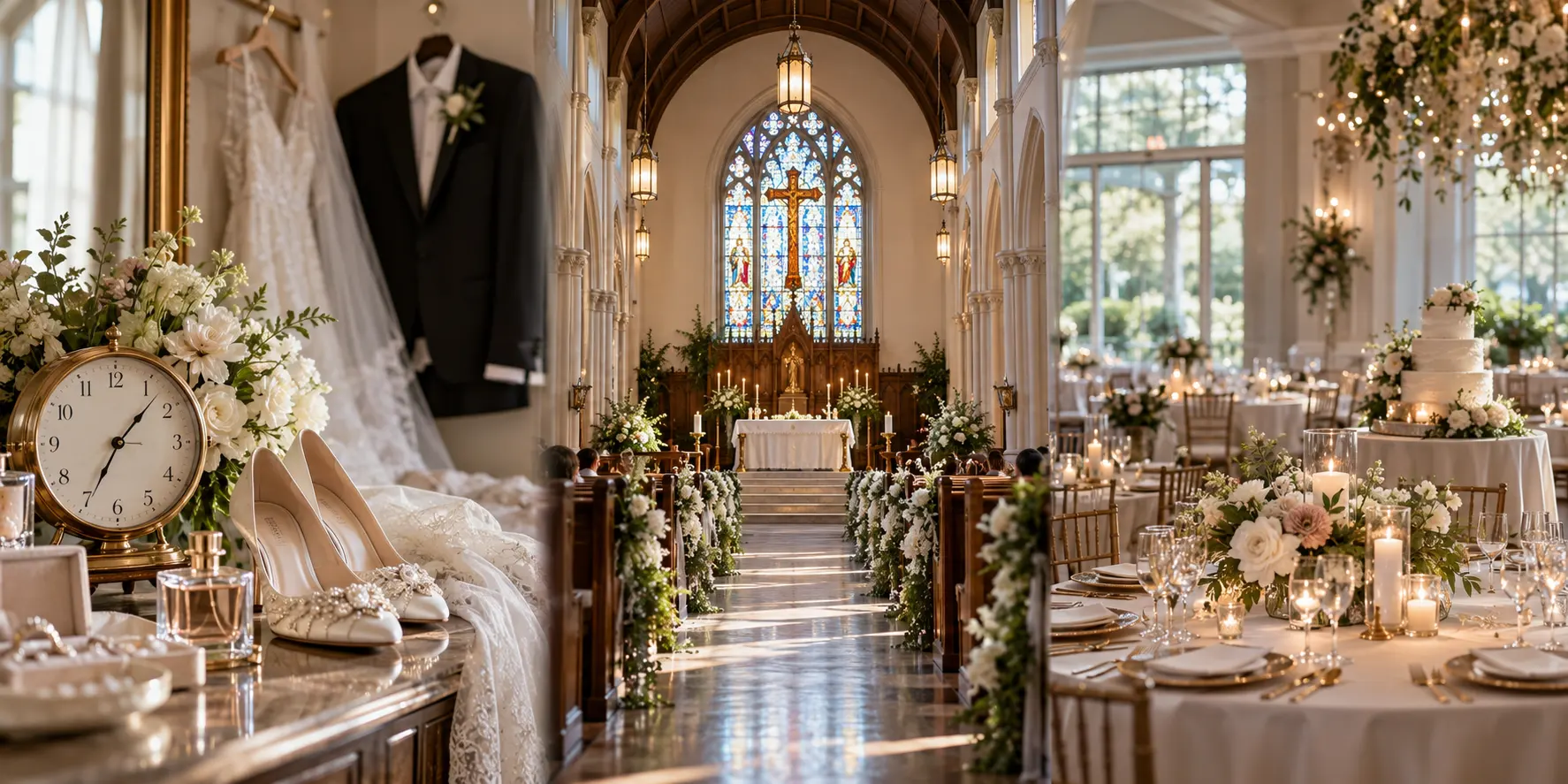
Reception Checklist
- Welcome drinks and a clear entry for the couple
- Have an emcee or a family member guide the programme and keep everything moving smoothly.
- Prayer or grace before the meal
- Toasts from the best man, maid of honour and parents
- Wedding cake cutting and the first dance, if you plan one
- Games, music and a short slideshow of the couple
- Bouquet toss, if you like the tradition
- Return gifts for guests and a guest book
After the Wedding Checklist
- Collect the church marriage certificate and the registrar's certificate
- Return rented outfits, decor items and borrowed things
- Pay balance amounts and collect receipts
- Send thank you notes to guests, vendors and the church team
- Update your name, address and status on Aadhaar, PAN, passport, bank accounts and insurance
- Back up all photos and videos in two places
Common Christian Wedding Planning Mistakes to Avoid
1. Booking vendors before the church: The church date comes first. Everything else follows.
2. Ignoring paperwork until the last month: Baptism and no objection certificates can take weeks to arrive.
3. Skipping the premarital course: Most churches will not proceed without it.
4. Not sharing church rules with vendors: Decorators and photographers must know what is allowed inside.
5. Spending too much on the reception: Keep the main focus on the ceremony and what truly matters. A simple, warm reception is often the most memorable one.
6. Trying to manage everything yourself: Delegate tasks to family and friends.
Money Saving Tips for a Christian Wedding
- Trim the guest list first. It lowers almost every cost.
- Choose an off season date, when venues and vendors often give discounts.
- Use church flowers and simple decor, then move a few arrangements to the reception.
- Compare at least three quotes for catering and photography.
- Hire a wedding gown or buy one that you can re-wear or restyle.
- Ask a skilled friend or choir member to help with music instead of hiring a large band.
- Track every expense in a shared sheet so that nothing is missed.
Planning a Christian Wedding in Goa
Goa is a popular choice for Christian couples because of its beautiful old churches, warm Catholic traditions and easy access to beach and resort venues for the reception. Many couples hold the church ceremony in the morning or late afternoon and host the reception at a nearby resort or villa.
- Book the church early: Well known churches get booked months ahead, especially from November to February.
- Check local legal rules: Goa follows its own civil registration process, so read the latest Goa wedding legal requirements before you finalise your dates.
- Plan guest travel: Block rooms near the church and the reception venue, and arrange cars for elderly relatives.
- Set a clear budget: Venue, stay and catering can change the total quickly, so a Goa destination wedding cost guide will help you plan realistically.
If you are travelling from another city and cannot visit often, a local wedding planner in Goa can coordinate with the church office, vendors and venue on your behalf.
Final Thoughts
A Christian wedding is not just a celebration. It also holds deep meaning for the couple and their families. It is the start of a lifelong promise made with faith. When you plan in the right order, book the church early, finish paperwork on time and keep your budget honest, the planning becomes calm and even joyful.
Save this Christian wedding checklist, share it with your partner and family, and tick off each task as you go. If you want an expert team to handle the venue, vendors and guest comfort, you can talk to the WedMyDay team and let us take some of the load off your shoulders.