
Why timing matters so much in Jaipur
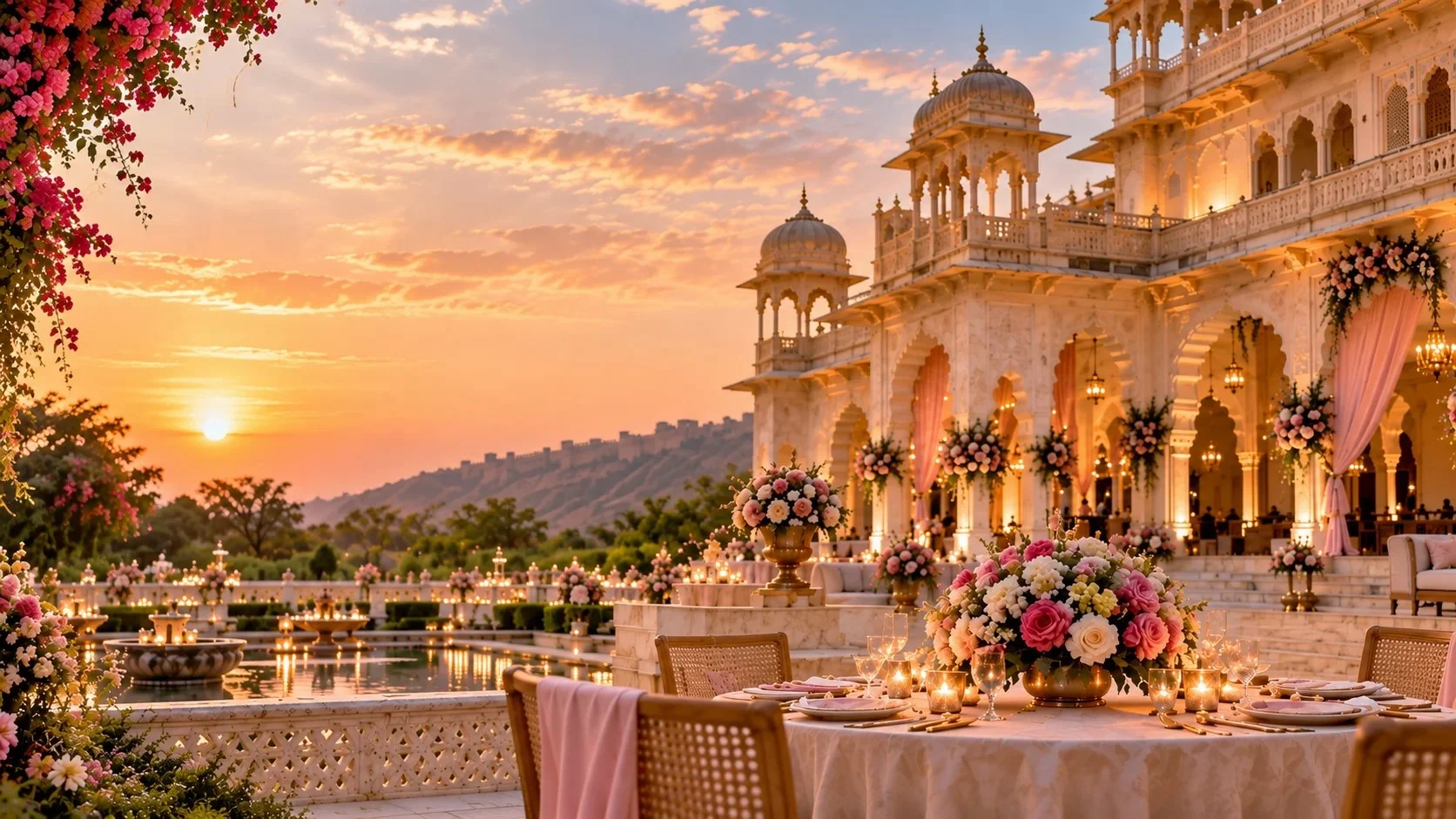
Jaipur is not a city where you can wing the wedding date. It sits in a semi-arid part of Rajasthan, and the temperature swing across the year is one of the widest of any major Indian wedding destination, from an average low near 8 degrees Celsius in January to an average high around 41 degrees Celsius in May. Extreme heat can go higher in some years. Most of Jaipur's best venues, City Palace style courtyards, Amer-inspired ramparts, open lawns at heritage forts, are built to be experienced outdoors.
Get the month wrong, and either your guests are sweating through the pheras or huddled indoors during a decor-heavy haldi that was meant to happen by the pool.
Beyond the weather, Jaipur weddings are shaped by two key factors: auspicious dates based on the Hindu Panchang and seasonal demand, which can significantly influence venue availability and pricing.
Once you understand the best wedding season, it becomes easier to plan your venue bookings and the next arrangements.

Month-by-month comparison table
| Month | Avg. High / Low | Rainfall | Wedding Demand | Month | Best Suited For |
| January | 22 degrees Celsius / 8 degrees Celsius | Minimal | High | 1 | Classic winter palace weddings |
| February | 26 degrees Celsius / 12 degrees Celsius | Low | Very high | 2 | Outdoor ceremonies, Valentine dates |
| March | 32 degrees Celsius / 17 degrees Celsius | Low | Moderate | 3 | Value seekers who still want good weather |
| April | 38 degrees Celsius / 23 degrees Celsius | Low | Low | 4 | Indoor, air-conditioned celebrations |
| May | 41 degrees Celsius / 27 degrees Celsius | Low | Very low | 5 | Budget indoor weddings, evening-only events |
| June | 40 degrees Celsius / 28 degrees Celsius | Moderate (rising) | Very low | 6 | Budget weddings with strong indoor backup |
| July | 35 degrees Celsius / 26 degrees Celsius | High | Low | 7 | Small, intimate, indoor monsoon weddings |
| August | 33 degrees Celsius / 25 degrees Celsius | Highest | Low | 8 | Intimate indoor celebrations, green backdrops |
| September | 34 degrees Celsius / 24 degrees Celsius | Moderate (falling) | Low | 9 | Early birds locking shoulder-season venues |
| October | 34 degrees Celsius / 20 degrees Celsius | Low | Rising | 10 | Post-monsoon greenery, good availability |
| November | 30 degrees Celsius / 14 degrees Celsius | Very low | High | 11 | Comfortable weather without deep winter cold |
| December | 25 degrees Celsius / 10 degrees Celsius | Minimal | Very high | 12 | Grand winter weddings, holiday guest travel |
1. January: Coldest, Clearest, and Booked Out Early
January is Jaipur at its coldest and most photogenic. Skies are clear, humidity is low, and the pink sandstone of the city's forts and havelis catches a soft, low winter light that photographers genuinely love. Mornings can start with a light fog and temperatures near 8 degrees Celsius, so daytime and early-evening ceremonies work far better than a 6 AM baraat.
| ProsCons | Cons |
| Best weather of the year for outdoor pheras and lawns | Highest demand of the year, so top venues sell out first |
| Post-holiday travel season means many out-of-town guests are already in a wedding mindset | No muhurat dates in 2026, which matters if your family follows the Panchang closely |
| Venues, decor, and photography all perform at their best | Cold nights need heaters, shawls, or covered spaces for late events |
2. February: The Sweet Spot Month
If there is one month that gives you winter comfort without winter's bite, it is February. Days warm up to a pleasant 27 degrees Celsius, nights are cool rather than cold, and it is arguably the single busiest wedding month in Jaipur's calendar, helped along by a heavy run of muhurat dates and the Valentine's week timing that many couples specifically request.
| Pros | Cons |
| The month with the highest number of muhurat dates in 2026 | Prices and competition for dates are at their absolute peak |
| Comfortable temperatures for both day and evening events | Popular venues and photographers get booked out 10 to 12 months ahead |
| Vendors, from mehndi artists to Kalbeliya folk performers, are working at full capacity and experience | Guest flights and hotel rooms in the city also cost more during this window |
3. March: The Underrated Shoulder Month
March is where smart planners look when they want winter-adjacent aesthetics without winter-level competition. Early March still feels close to February, with warm days and cool evenings, though the heat starts building noticeably by the last week. It also carries Holi, which can be a beautiful, colour-soaked backdrop for a sangeet or haldi if your dates line up.
| Pros | Cons |
| Noticeably better venue availability than November through February | Heat builds quickly in the back half, so late-March afternoon events can feel warm |
| Rates typically sit 15 to 25 percent below peak season | Fewer muhurat dates than February, so fewer date options if astrology is a factor |
| Still comfortable enough for a full outdoor schedule in the first half of the month |
4. April: Where Summer Really Begins
April is the clear turning point. Daytime temperatures push into the high 30s, and an outdoor midday ceremony becomes genuinely uncomfortable for guests in formal wear. Evenings still hold up reasonably well, which is why most April weddings in Jaipur are built around sunset ceremonies and air-conditioned banquet halls rather than open lawns.
| Pros | Cons |
| A solid number of 2026 muhurat dates | Daytime outdoor functions are genuinely hard on guests, particularly elderly family members |
| Significant savings on venue and vendor rates | Requires stronger AC, shaded, or indoor infrastructure at every venue |
| Far easier to negotiate on catering, decor, and photography packages |
5. May: Jaipur's Hottest Month
May is Jaipur's peak summer, with daytime highs regularly crossing 41 degrees Celsius and very little relief overnight. This is the month with the steepest discounts of the year, since almost no couples are actively choosing it, but it also demands the most careful planning. Any function scheduled between 11 AM and 5 PM should assume full indoor, air-conditioned conditions.
| Pros | Cons |
| Deepest discounts of the calendar year on venues and vendors | Extreme heat makes outdoor ceremonies impractical for most of the day |
| Multiple muhurat dates for families who prioritise the Panchang above weather comfort | Guest comfort, especially for older relatives and young children, needs real attention |
| Very easy to negotiate flexible dates and package inclusions | Bridal makeup and outfits need heat-proofing (lighter fabrics, touch-up plans) |
6. June: Hot, Humid, and Waiting on the Monsoon
June carries over most of May's heat, and humidity starts climbing toward the end of the month as the monsoon approaches. It is one of the least-booked months for weddings in Jaipur, which is exactly why it comes with some of the year's best vendor availability and pricing flexibility, useful if your date is fixed by a family muhurat rather than by weather preference.
| Pros | Cons |
| Late June offers a concentrated stretch of auspicious wedding dates | Heat and rising humidity together make outdoor daytime events difficult |
| Lowest competition for dates and vendor calendars of the year | Sudden pre-monsoon dust storms are possible and can disrupt outdoor decor |
| Strong bargaining position on venue packages |
7. July: Monsoon Arrives
The monsoon typically settles in through July, bringing welcome relief from the summer heat along with regular rain and high humidity. Temperatures drop from May and June's extremes into the low-to-mid 30s, and Jaipur's surroundings turn a rare shade of green. It is a lovely time to visit and photograph the city, but weddings need to plan entirely around the possibility of rain.
| Pros | Cons |
| Cooler than peak summer, with lush, green surroundings | Rain can arrive with little warning, so outdoor plans need a same-day backup |
| The last muhurat window before a four-month gap | Humidity affects hair, makeup, and outdoor decor durability |
| Off-peak pricing still applies | Guest travel can be disrupted by heavy rain on connecting roads |
8. August: The Wettest Month
August typically records Jaipur's highest rainfall and humidity of the year. Very few couples choose this month for a wedding, partly due to the weather and partly because many Panchang calendars do not list Shubh marriage dates during this broad no-muhurat period. It suits couples having a registered or civil ceremony, or a smaller family function where the muhurat calendar is not a factor.
| Pros | Cons |
| Near-empty wedding calendar means maximum flexibility with venues and vendors | Highest rainfall of the year, so outdoor functions carry real risk |
| Cooler than summer, with dramatic monsoon skies for photography | No muhurat dates, ruling this month out for many traditional Hindu weddings |
9. September: Monsoon on Its Way Out
Rainfall starts tapering through September, though it can still be unpredictable, particularly in the first half. Like August, this month falls within Chaturmas, so it sees very few traditional Hindu weddings. It is mainly useful as a planning window: many couples targeting an October or November wedding start locking venues and vendors during these quieter weeks.
| Pros | Cons |
| Good time to finalise venues ahead of the October to February rush | Weather is still inconsistent early in the month |
| Lower rates while demand is still soft | No muhurat dates for couples following the Panchang |
10. October: Wedding Season Reopens
October marks the real start of Jaipur's wedding season. The monsoon has cleared, the Aravalli hills around the city carry a rare green tinge, and the air feels noticeably fresher than the months before it. Early October can still run warm, but temperatures cool steadily as the month goes on, setting the stage for the November-to-February run.
| Pros | Cons |
| Fresh, post-monsoon greenery that most competing wedding blogs barely mention | No 2026 Shubh marriage dates are listed for Jaipur in October |
| Prices still well below peak season | Early-month afternoons can still be warm for a full outdoor schedule |
| Noticeably better venue and vendor availability than winter |
11. November: Comfortable Weather, Strong Muhurat Run
November brings Jaipur's weather down to genuinely comfortable levels, warm days without summer's edge and cool, pleasant evenings. It kicks off the true peak wedding season, often overlapping with Diwali celebrations, which adds festive energy to the whole month but also pushes flight and hotel prices higher for travelling guests.
| Pros | Cons |
| Comfortable weather for both day and night functions | Overlaps with Diwali travel, which raises flight and hotel costs for out-of-town guests |
| Festive atmosphere across the city around Diwali | Only a handful of muhurat dates, so those specific dates fill up quickly |
| Strong muhurat dates right at the reopening of the wedding season |
12. December: The Grand Finale of Wedding Season
December closes the year at close to January's temperatures, cool, dry, and crisp, with occasional cold snaps that push night temperatures down to 4 to 5 degrees Celsius. Combined with year-end holidays that make travel easy for guests, this is consistently one of Jaipur's busiest and most expensive wedding months.
| Pros | Cons |
| Ideal weather for outdoor pheras, sangeet nights, and open-lawn receptions | Rates and competition for popular venues peak alongside November and January |
| Year-end holidays make it easy for guests from other cities and countries to attend | Cold nights need proper heating for late-evening outdoor events |
| Photography and decor both perform beautifully in the crisp winter light | Top palace properties are often booked out well over a year ahead for December Saturdays |
The 3 best months for you
If you only take one thing from this guide, take this: for the strongest overall balance of weather, atmosphere, and muhurat availability in 2026, these three months come out on top.
1. February
The widest spread of 2026 muhurat dates, dependable warm-but-comfortable weather, and a city that is fully in wedding mode. Book 10 to 12 months ahead if you want a specific date.
2. December
The most reliably beautiful weather of the year for outdoor ceremonies, plus the convenience of year-end holiday travel for guests. Expect peak pricing and book early for weekend dates.
3. November
Comfortable weather with a lighter crowd than December, plus a festive Diwali-season atmosphere across the city. Fewer muhurat dates, so lock your date early if astrology matters to your family.
How season affects your budget
Across our network of 120+ Jaipur venues, a destination wedding here typically runs from Rs 25 lakh to Rs 2 crore or more , depending on guest count, venue category, and decor scale, with most 100 to 150 guest weddings landing between Rs 20 lakh and Rs 70 lakh. Season is one of the biggest single levers on that final number.
| Season | Months | Typical Pricing vs. Peak | Availability |
| Peak | Nov, Dec, Jan, Feb | Full rate | Books out 10 to 18 months ahead |
| Shoulder | Mar, Oct | 15 to 25 percent lower | Books out 6 to 9 months ahead |
| Low | Apr, May, Jun, Jul, Aug, Sep | 25 to 40 percent lower | Often available 3 to 6 months out |
Beyond the venue itself, weekday dates (Monday through Thursday) typically cost less than Friday to Sunday dates in any season, and this gap can be a useful lever if your muhurat calendar happens to land on a weekday.To understand how these seasonal changes affect your total spend, read this full jaipur destination wedding cost guide.
Every wedding season comes with different planning needs. Once you know which month suits you, start listing the bookings and arrangements that need attention.
How far in advance to book
- Peak season (November to February): Book your venue 10 to 18 months ahead. For iconic heritage palaces on a Saturday or a specific muhurat date, 12 to 18 months is safer.
- Shoulder season (March, October): 6 to 9 months is usually enough to get a strong pick of venues and vendors.
- Low season (April to September): 3 to 6 months' notice is often workable, and some venues will even confirm within weeks if you are flexible on the exact date.
Photographers, decorators, and mehndi artists follow a similar pattern, though top-tier photography teams for peak season dates can get booked out even earlier, sometimes a full 12 months in advance.Peak-season dates get booked early, so shortlist wedding venues in jaipur as soon as your month is clear.
Mistakes couples make with wedding dates in Jaipur
- Assuming "winter" automatically means good weather all day. January and December mornings can be genuinely cold, so an early daytime ceremony needs heating or a later start time.
- Booking an outdoor-only venue for April through September without an indoor backup. Even shaded lawns are difficult to manage past 11 AM in peak summer.
- Chasing a muhurat date without checking venue and vendor availability first. The best-known muhurat dates in peak months get claimed fast, so shortlist your venue before locking the exact date with your astrologer where possible.
- Ignoring guest travel costs tied to the season. November and December weddings often overlap with festival or holiday travel, which pushes up flights and hotel rates for your guests, not just your venue cost.
- Not budgeting for shoulder-season weather swings.Early October and late March can both run warmer than expected, so keep a contingency plan even outside the true summer months. Those couples who are still comparing beach and royal destinations should also read this goa vs jaipur wedding comparison before locking the city.